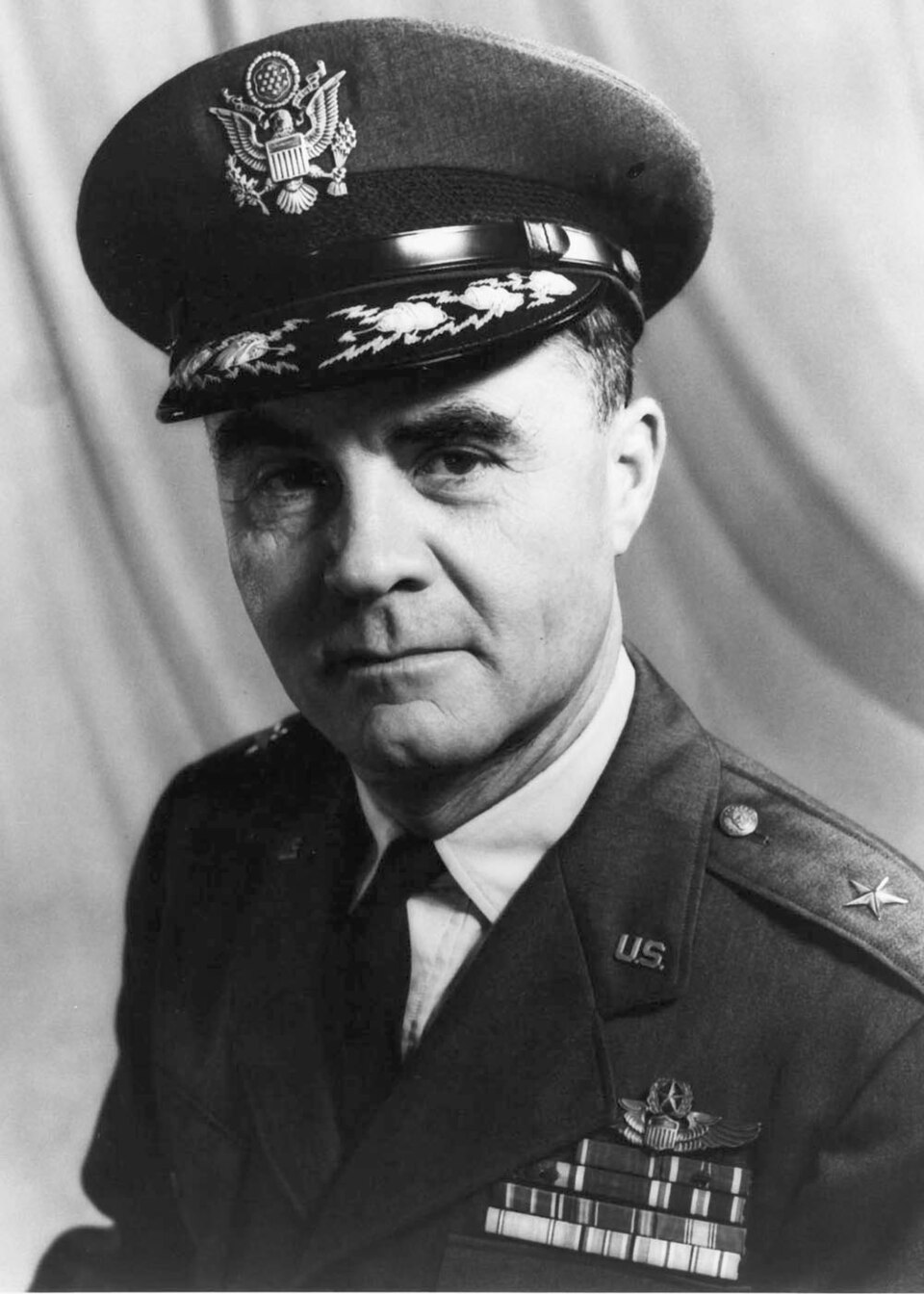
Brigadier General Paul W. Tibbets, 1960. Image courtesy of www.en.wikipedia.org
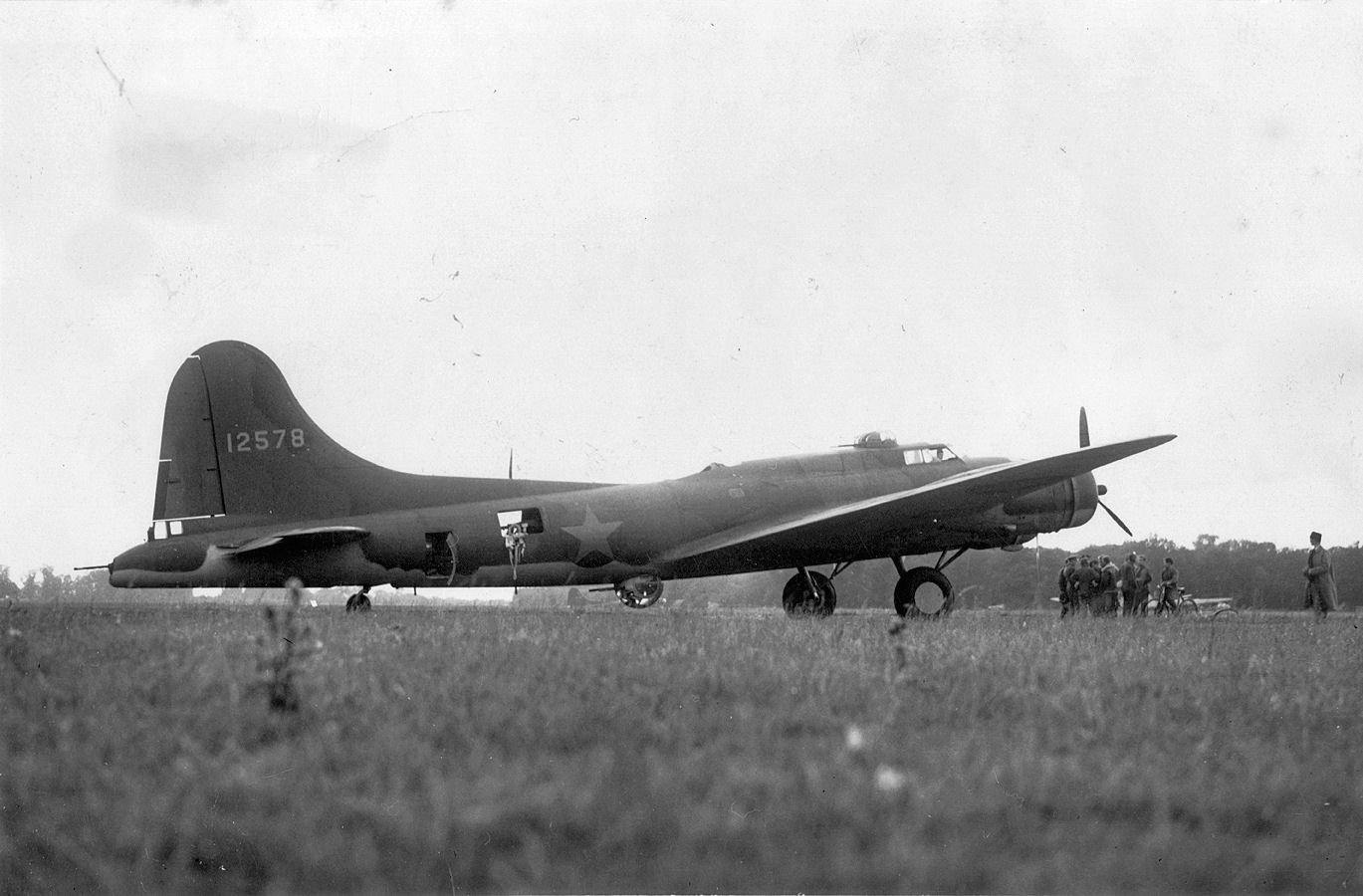
Image of B-17E #41-2578 Butcher Shop at Grafton Underwood. Image courtesy of www.americanarchive.iwm.org.uk
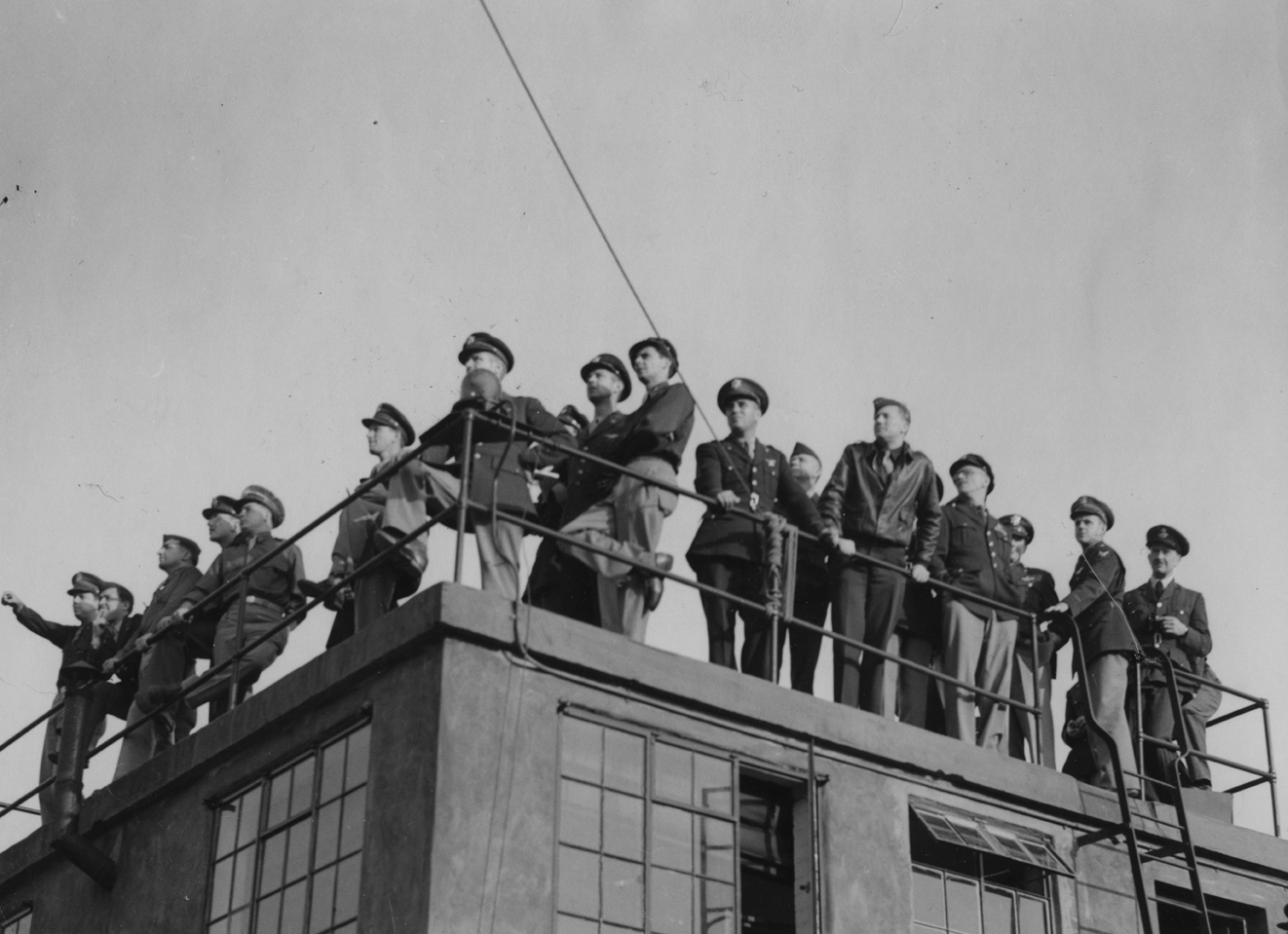
The Control Tower at Grafton Underwood on the evening of 17th August 1942, awaiting the return of the B17s from the first heavy bomber mission. Image courtesy of www.americanarchive.iwm.org.uk
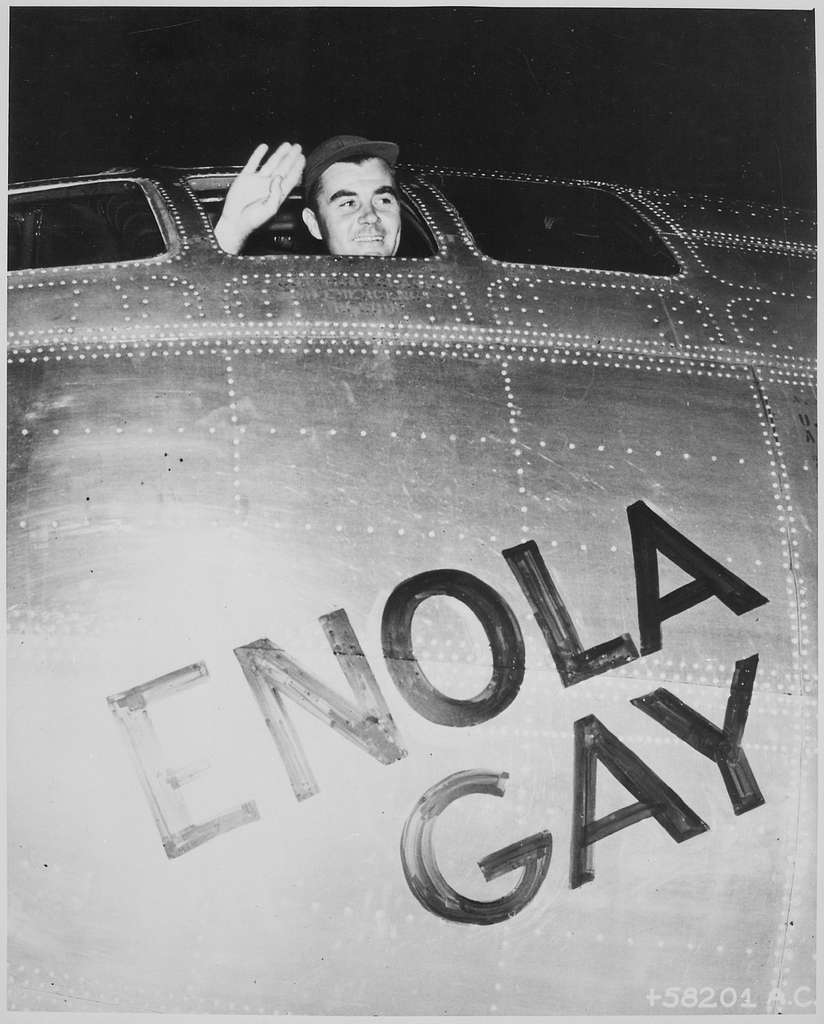
Colonel Tibbets peers out of the side window of B-29 Enola Gay prior to take off. Image courtesy of www.en.wikipedia.org
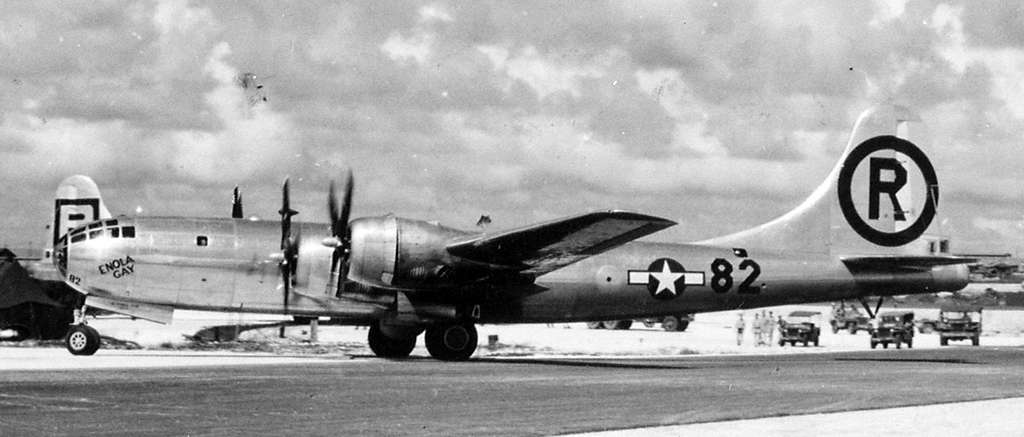
B-29 Enola Gay, after the Hiroshima mission. Image ciurtesy of www.en.wikipedia.org
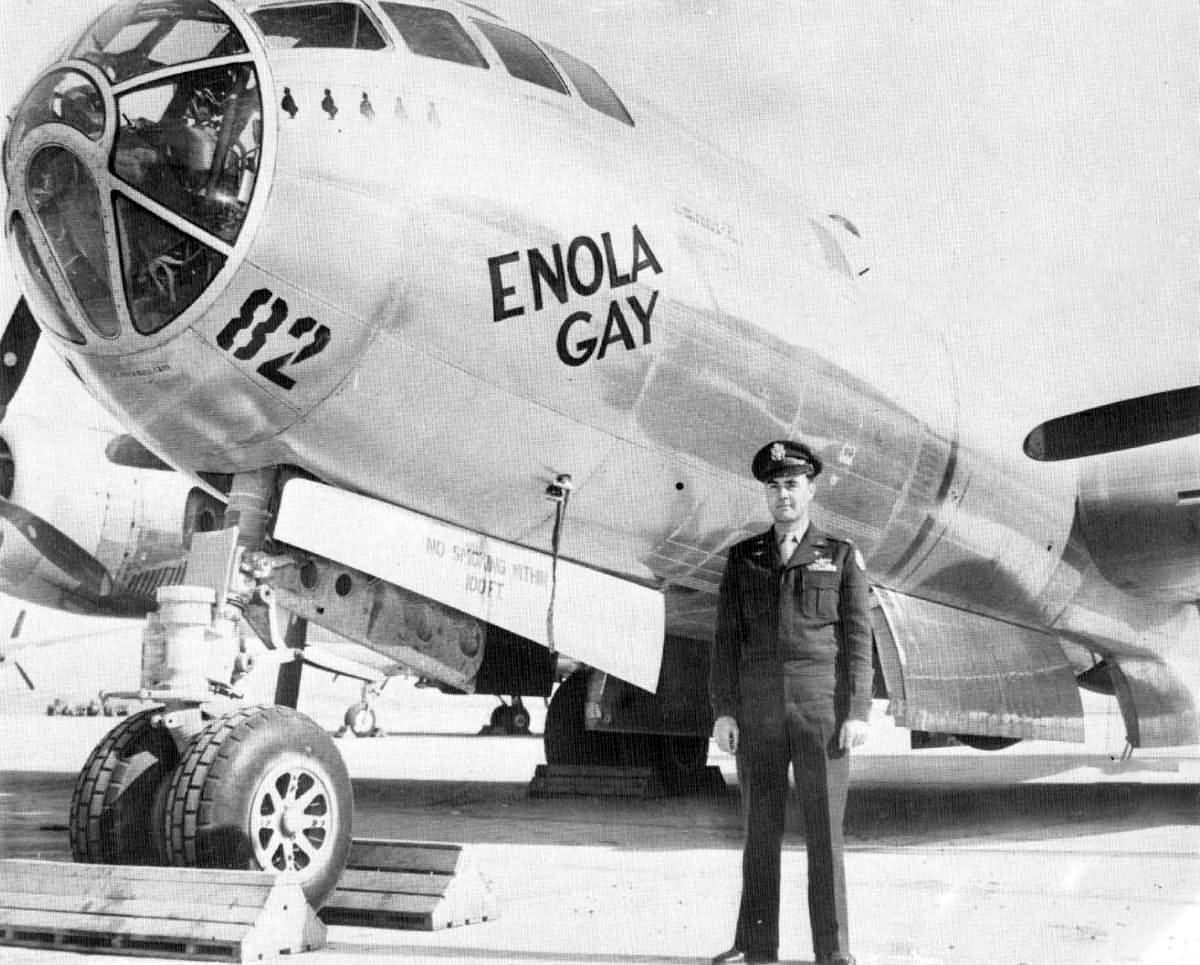
Colonel Tibbets standing in front of B-29 Enola Gay. Image courtesy of www.picryl.com
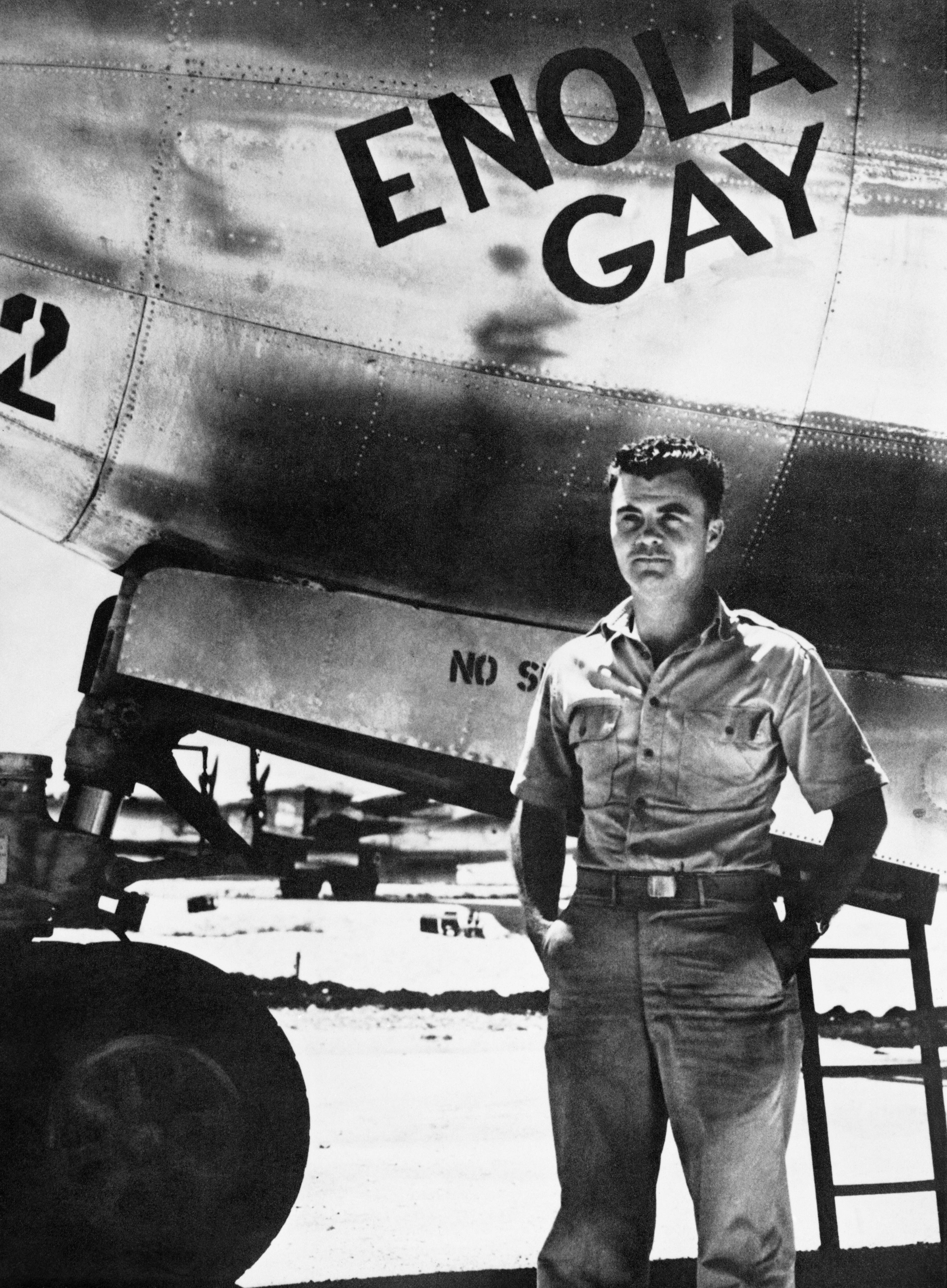
Colonel Tibbets standing in front of B-29 Enola Gay. Image courtesy of www.picryl.com
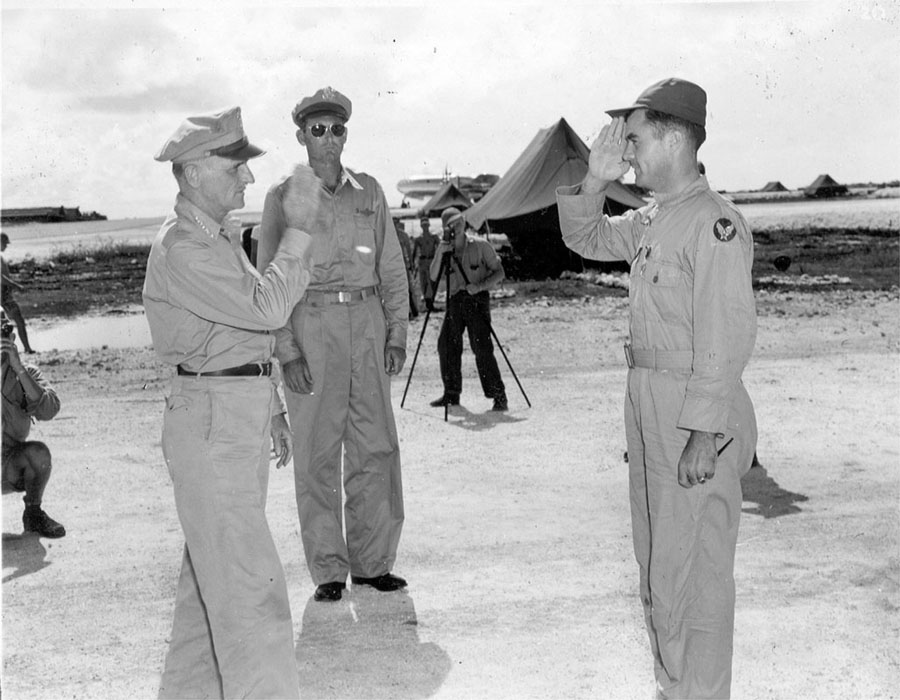
Col. Tibbets being presented with the Distinguished Service Cross by General Carl Spaatz, after the Hiroshima mission. Image courtesy of www.Colonel Tibbets standing in front of B-29 Enola Gay. Image courtesy of www.picryl.com
The Story of Paul Warfield Tibbets Jnr.
Last updated: October 4, 2026, 1:45 pmBrigadier General
Paul Warfield Tibbets Jnr.
Pilot, Squadron Commander, Test Pilot, B-29 Development Lead, Commander 509th Composite Bomb Group, Senior Air Force Officer USAAF / USAF.
Pilot - B-17E 'Butcher Shop', 97th Bomb Group, Lead Pilot of first USAAF heavy bomber mission of WW2 over occupied Europe, flown out of RAF Grafton Underwood - 17th August, 1942
Pilot - B-29 Superfortress 'Enola Gay', 509th Composite Bomb Group, first atomic bombing mission on Hiroshima, Japan - 6th August, 1945
Resting Place - in line with his own wishes, he has no grave - his ashes were scattered above the English Channel.
Paul Warfield Tibbets was born on 23rd February 1915, in Quincy, Illinois. In 1924, his family moved to Florida.
In September 1928, in line with his father's wishes, Paul was to attend the Western Military Academy in Alton, Illinois. In the autumn of 1933 he began to attend the University of Florida, before switching to the University of Cincinnati for medical college. Many family members were employed in the medical field and it was assumed that Paul would follow in their footsteps.
Paul had developed a fascination with aircraft from a young age. At the age of twelve Paul found himself the 'bombardier' of a biplane overflying a racetrack crowd, his bombload today being 'Babe Ruth' candy bars as part of a publicity exercise. As he grew up, he spent spare whatever money he had on taking flying lessons whenever possible. After a year of medical college, he decided that his future was to be in aviation.
On 25th February 1937 Paul W. Tibbets enrolled with the Army Air Corp, for basic training. He entered Flying School at Randolph Field, Texas before graduating from Pilot School at Kelly Field, Texas in February 1938 as a 2nd Lieutenant.
In April 1941 he was appointed Group Engineering Officer of the 3rd Attack Group at Hunter AF Base, Savannah, Georgia.
On 4th December 1941 he received orders to join the 29th Bomb Group at MacDill Field, being then given temporary orders to take a unit of 21 B-18s to Pope Field, North Carolina to form an anti-submarine patrol.
Shortly afterwards, 2nd Lt. Tibbets was to be made Commander of the 340th Bomb Squadron, 97th Bombardment Group - a newly formed group that pulled personnel from the 29th Bomb Group. This new group was earmarked to fly the new Boeing B-17 Flying Fortress, and in June 1942 they began training for overseas deployment.
In June 1942, the 97th Bomb Group began to arrive in the England. Utilising the newly completed airfields at RAF Polebrook and RAF Grafton Underwood in Northamptonshire, the 97th became the first heavy bomber Group of the USAAF to fly a combat mission over occupied Europe, with a force of twelve aircraft departing from Grafton Underwood to bomb the railroad marshalling yards at Rouen-Sotteville, on 17th August 1942. At the same time, a further six B-17s flying out of Polebrook, took part in a diversionary mock raid along the French coastline to attract attention of the Luftwaffe away from the main bomber force. All eighteen B-17s returned home, with two aircraft suffering minimal flak damage.
Major Paul W. Tibbets was lead pilot (as he would be on the majority of future missions flown from England with the 97th), with Group Commander Colonel Frank A. Armstrong flying as co-pilot in B-17E Butcher Shop. Also flying on this mission in B-17E Yankee Doodle was head of the Eighth Bomber Command, Brigadier General Ira Eaker.
On the 9th October Major Tibbets was lead pilot for the 8th Air Force mission #14, the first time they had mustered more than 100 heavy bombers on a single raid.
The 97th Bombardment Group would complete 16 combat missions from their UK bases before being transferred to the 12th Air Force, flying missions in the Mediterranean theatre.
October 1942 saw 2nd Lt. Paul Tibbets selected for a special assignment. General Mark Clark had been appointed as head of Operation Torch, the invasion of North Africa - Tibbets was tasked with flying the General to rendezvous with French forces ahead of the operation, a last minute top secret mission. Tibbets was retained to ferry General Eisenhower and his staff to Gibraltar on the evening of the invasion. He then flew General Clark to Algiers, where he took control of the invasion forces.
Tibbets returned back to the 97th Bomb Group as they continued bombing missions across North Africa. In January 1943, he was reassigned to the 12th Air Force Headquarters at Algiers, as Assistant Operations Officer in charge of bomber operations under Colonel Lauris Norstad.
A new heavy bomber was under development in America by early 1943, the Boeing B-29 Superfortress. In March 1943 Tibbets returned to America, assigned to work on the programme of this new, highly complex aircraft - he was to serve with Air Material Command until March 1944. As a test pilot on the B-29 programme, much of his work was to help define operating tactics for what was then the world's largest aircraft.
In March 1944 Tibbets was assigned to Grand Island Army Air Field as Director of Operations for a new B‑29 instructor transition school under General Frank Armstrong, helping to train crews for the new B-29 Superfortress bomber. The complex aircraft required a high level of re-training for pilots transitioning from the much simpler B-17 and B-24.
1st September 1944 saw Tibbets packing his bags and heading his B-29 towards Colorado Springs in response to an urgent telephone call he had received the day before from General Uzal G. Ent, Commander of the 2nd Air Force. On arrival, Tibbets was questioned at length about his background during which it became apparent to him that a highly detailed investigation of his background had already been undertaken. Only at the satisfactory conclusion of this 'interrogation' was he then taken to the meeting room where General Ent was waiting, along with a committee of several other officials.
Only now did the details of his next assignment start to be detailed. He was warned that the project he was about to the involved with was so secret that he could discuss the details with no-one - not his wife nor other family members, nor indeed the people he would soon be working alongside. The explanation of the project began, it was simply put that he was to develop from scratch an organisation that would be capable of delivering a new type of explosive weapon so powerful that, as yet, its true capability was still unknown. This was the Atomic Bomb Project. It was estimated that he would have around a year to develop this force - such was the importance, whatever he required to make this happen, he would get.
His primary role was to find a way to mate the new (and currently troublesome ) B-29 Superfortress with this new type of weapon. Aircraft would need modifying, crew would need specific training, and it would require a certain plan of action to deliver the weapon - all this needed pulling together, without him being able to actually explain the reason behind the actions involved.
Out of this, the 509th Composite Group was born, becoming an active unit of the 2nd Air Force on 17th December 1944. It encompassed the crew, technicians, aircraft and all necessary support teams for them to fulfil their mission. Colonel Paul W. Tibbets was their Commander. His influence spread from top to bottom of the group, as they worked towards operational readiness. The group was based at Wendover Army Air Field, Utah - a location specifically chosen by Tibbets due to its isolated location, perfect for maintaining a cover over the groups training actions.
In Spring 1945, the group was combat ready. It moved to North Field, Tinian in the Mariana Islands. They conducted initial test raids on Japanese targets, including the use of 'pumpkin' bombs - these were dummies of the atomic weapon, filled with conventional explosive, to test the loading and dropping of such weapons from the modified B-29s.
6th August 1945, 8.15am - Hiroshima, Japan. The 509th CG B-29 Enola Gay, piloted by Tibbets, dropped the “Little Boy” uranium bomb on the city below. The attack caused catastrophic destruction and loss of life. This event is widely recognised as a turning point in world and military history.
The end of World War 2 would come soon after. The 509th Composite Group, under the command of Tibbets, had completed their mission. They transferred to Walker Air Force Base, Roswell, New Mexico where they remained until August 1946.
Tibbets was assigned as Technical Advisor to the Air Force Commander during the Bikini Atoll Bomb Project during 1946.
His next assignment was to Air Command & Staff School at Maxwell Air Force Base, Alabama, before moving to Directorate of Requirements, Headquarters US Air Force as Director of the Strategic Air Divisions.
In June 1950, Tibbets was assigned to Eglin AFB, and from July 1950 to February 1952 he became the Project Office at Boeing Airplane Company for the new jet powered bomber, the B-47 Stratojet. He was to be heavily involved in testing the new bomber and bringing it up to operational capability for the Air Force, including test flying the aircraft.
From February 1952 until August 1954, Tibbets was placed as Commander of the Proof Test Division at Eglin AFB, a unit responsible for evaluating weapons systems and their operational testing. After completion of this assignment, he was to attend the Air War College at Maxwell AFB, graduating in June 1955. His next assignment was Director of War Plans, Allied Air Forces in Central Europe, based at Fontainebleu, France.
With the Cold War beginning to gather pace, his next two roles carried significant importance with the Air Force. From February 1956, Tibbets was to return to America as Commander of the 308th Bomb Wing at Hunter AFB, Georgia. They were flying the B-47 Stratojet, the aircraft Tibbets had spent time developing back in the early 1950's.
In January 1958 he was reassigned to MacDill AFB, Florida where he assumed command of the 6th Air Division. Under his control initially he had the 305th and 306th Bomb Wings, each with around 45 B-47s. In July 1959 they were joined by the 321st Bob Wing, meaning that Tibbets had around 135 bomber aircraft under his direct command.
From February 1961 Tibbets moved into roles at the Headquarters of the USAF, in the Pentagon, until August 1964.
His next, and final role with the USAF, was as a U.S. Military Attaché in India, a senior diplomatic role in a sensitive area of the world following recent heightened local tensions.
On 31st August 1966 Paul Warfield Tibbets retired from his service with the United States military.
Following his retirement, Paul became an executive with Executive Jet Aviation, an early pioneer of corporate jet transport. He helped to expand the company's operations through the 1960s and 1970s, eventually serving as their President. He was a frequent public speaker on his many areas of expertise, and remained active in veterans' organisation, historical programmes and commemorative events linked with the USAAF and USAF.
Paul lived his later years in Columbus, Ohio and died at home on 1st November 2007, aged 92.
In accordance with his wishes, there was no funeral ceremony and his remains were cremated. He had requested there to be no memorial service, and no headstone as he feared in time this may become a focal point for protests against the Hiroshima mission. His ashes were scattered over the English Channel, a place symbolic to his early years of service when flying out of Grafton Underwood and Polebrook.
Although his wartime path carried him far beyond Northamptonshire, the foundations of his command style and operational judgement were laid during those first missions from Grafton Underwood. His subsequent senior Air Force career, culminating in high‑level Pentagon and diplomatic posts, reflected the same qualities he displayed in 1942: precision, discipline, and an unwavering commitment to mission success. The story of Paul Warfield Tibbets Jnr. therefore remains closely connected to Grafton Underwood — the airfield where his reputation was first forged and where the legacy of the Groups of the United States Army Air Force that operated from the airfield continue to be honoured.
Research courtesy of Keith Andrews on behalf of 384th Bombardment Group Museum.
Information courtesy of:-
https://en.wikipedia.org/wiki/Paul_Tibbets
www.af.mil/About-Us/Biographies/Display/Article/105458/brigadier-general-paul-w-tibbets-jr
Book - "Return of the Enola Gay", by Paul W. Tibbets
Gallery
Brigadier General Paul W. Tibbets, 1960. Image courtesy of www.en.wikipedia.org
Image of B-17E #41-2578 Butcher Shop at Grafton Underwood. Image courtesy of www.americanarchive.iwm.org.uk
The Control Tower at Grafton Underwood on the evening of 17th August 1942, awaiting the return of the B17s from the first heavy bomber mission. Image courtesy of www.americanarchive.iwm.org.uk
Colonel Tibbets peers out of the side window of B-29 Enola Gay prior to take off. Image courtesy of www.en.wikipedia.org
B-29 Enola Gay, after the Hiroshima mission. Image ciurtesy of www.en.wikipedia.org
Colonel Tibbets standing in front of B-29 Enola Gay. Image courtesy of www.picryl.com
Colonel Tibbets standing in front of B-29 Enola Gay. Image courtesy of www.picryl.com
Col. Tibbets being presented with the Distinguished Service Cross by General Carl Spaatz, after the Hiroshima mission. Image courtesy of www.Colonel Tibbets standing in front of B-29 Enola Gay. Image courtesy of www.picryl.com