Officer's Club
Communal Site - Grafton Park Wood
A chance to relax and recuperate
Discipline, Respect, Teamwork
It was official doctrine of the United States Army Air Force that Officers would have their own facilities for living, eating and bathing, separate from the Enlisted personnel. This was part of the effort to instil discipline and a formal structure into day-to-day life and operations, and to prevent familiarity from undermining authority.
Specific facilities for Officers also enabled them to have space for discussions that were either private or security-sensitive. One such facility at Grafton Underwood was the Officer's Club, set within the Communal Site in Grafton Park Wood.
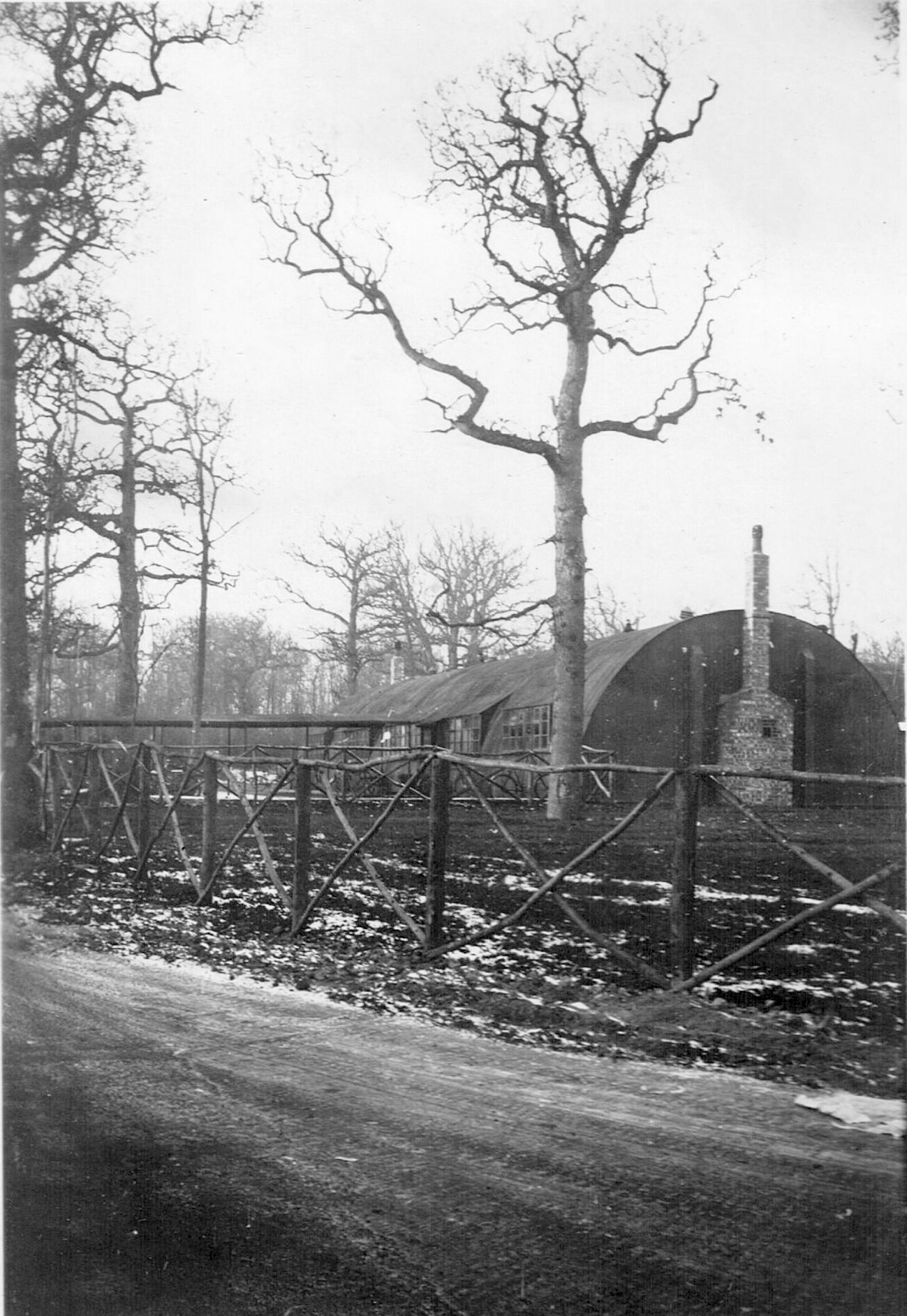
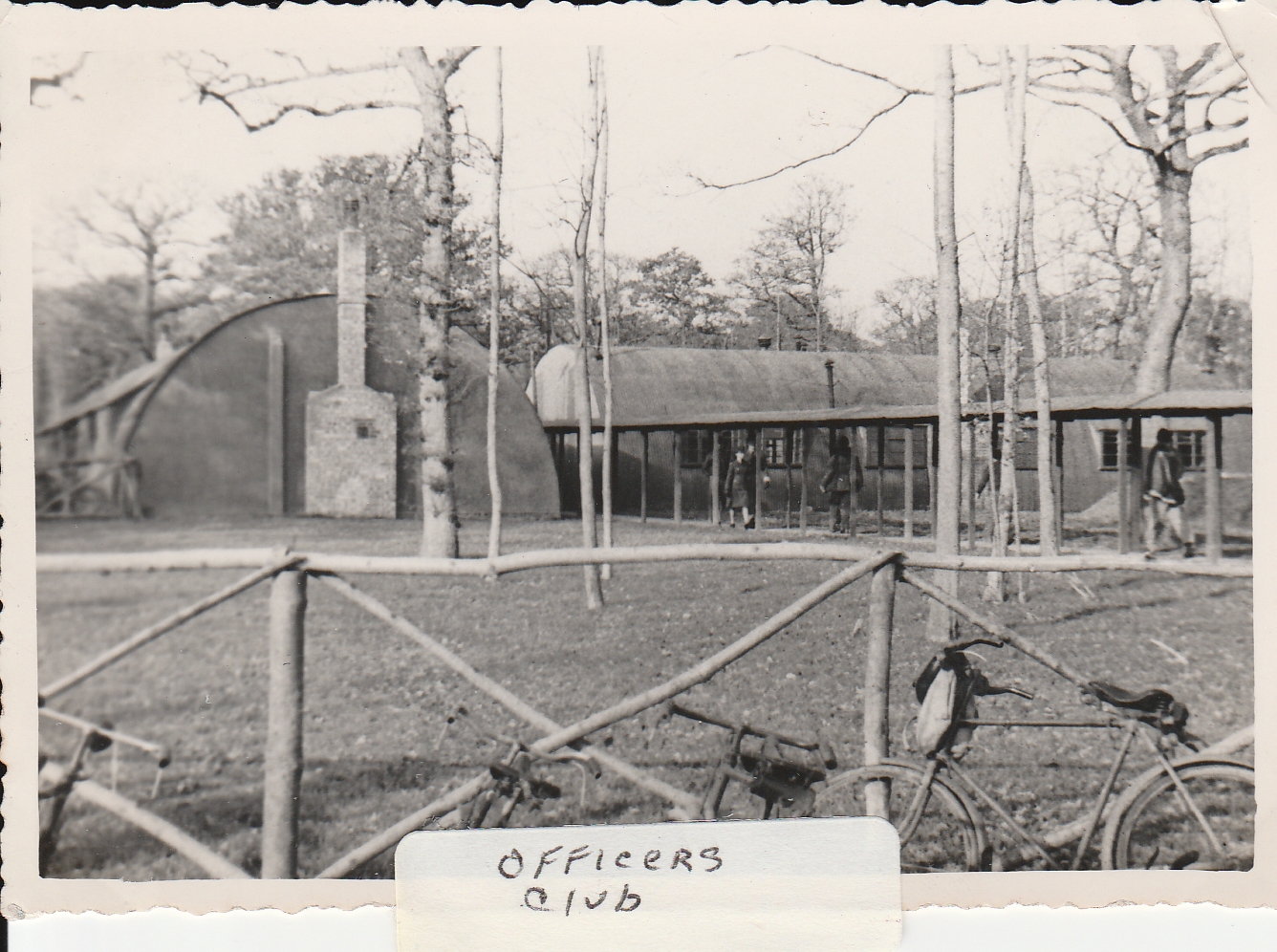
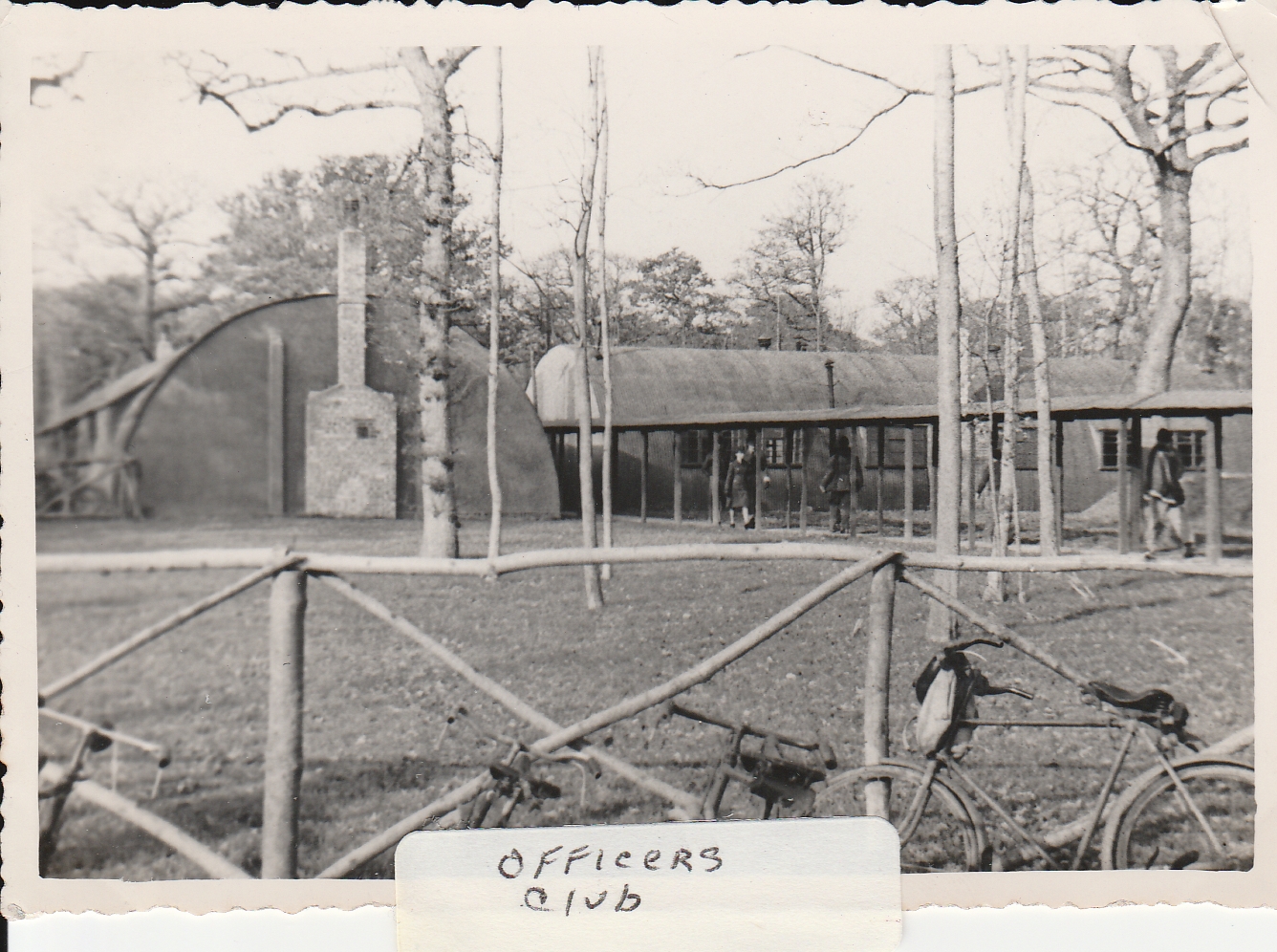
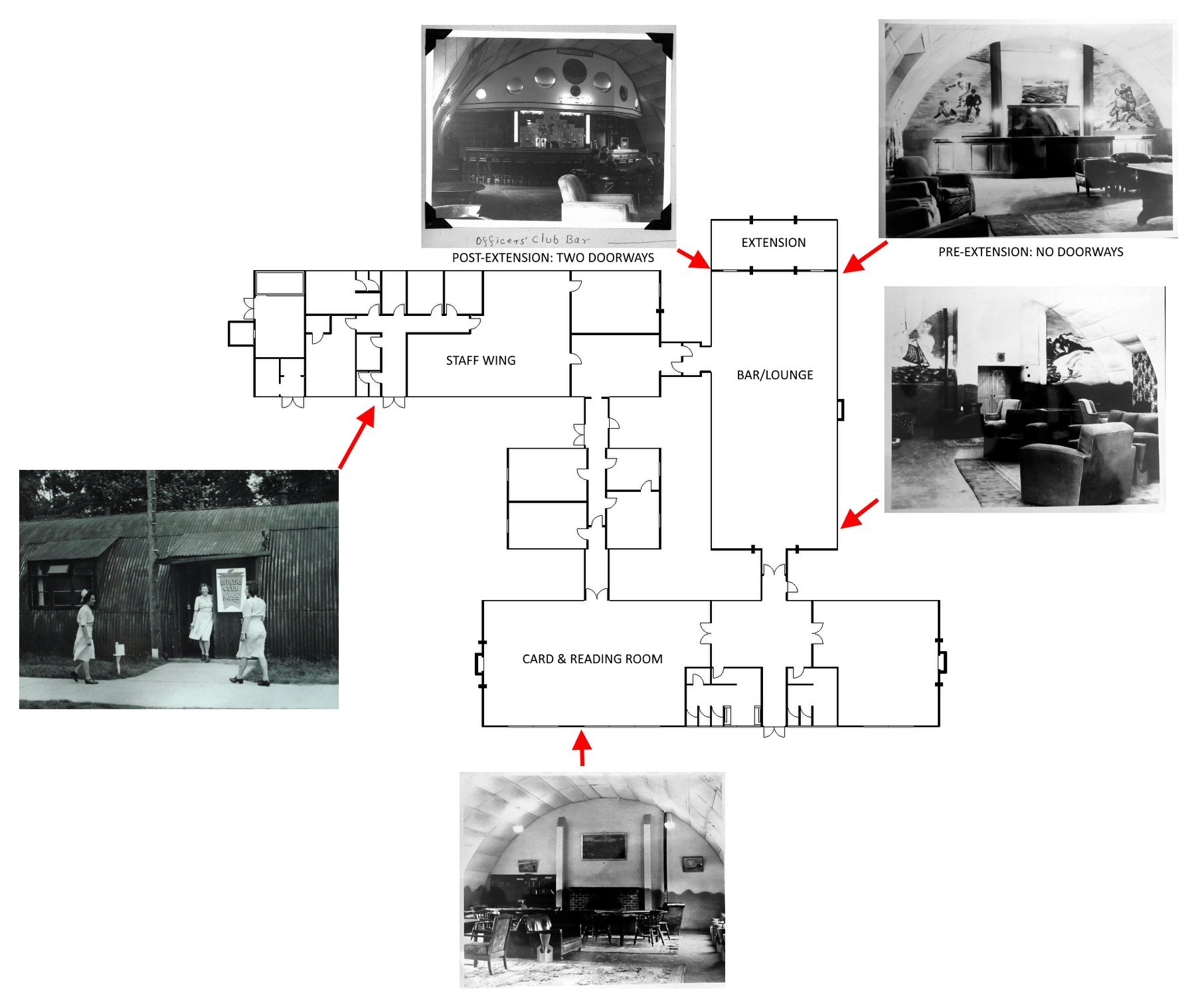
The Officer's Club was situated near the Foxy Theater. It comprised three separate buildings, all linked together, and offered a distinct social space where officers could read, talk, play cards and briefly step away from the pressures of operations.
The Club balanced hierarchy with respite: a place shaped by discipline and privacy, but also by conversation, music, games and the quiet rituals that helped officers recover between missions.
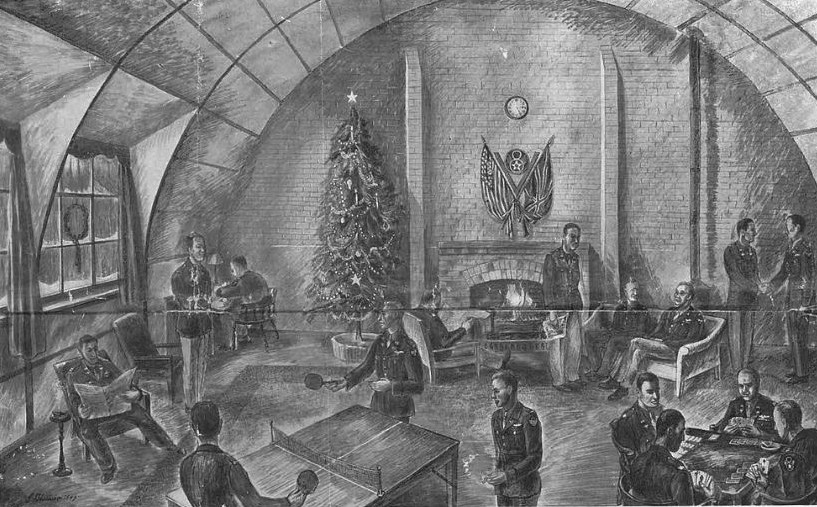
The drawing in Plane News from December 1943 captures that atmosphere especially well, showing card games, table tennis and the sociable life that animated the building.
Three Linked Spaces
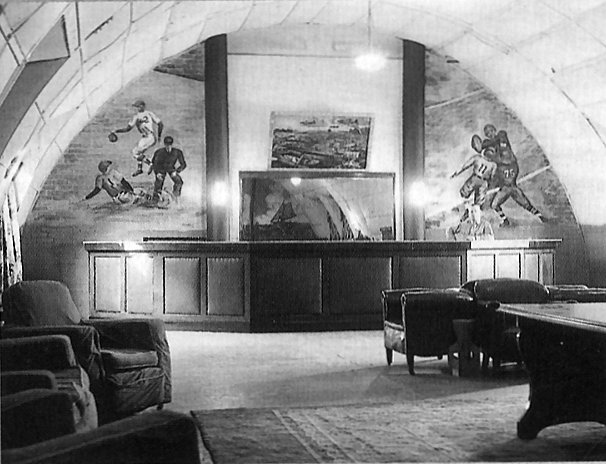
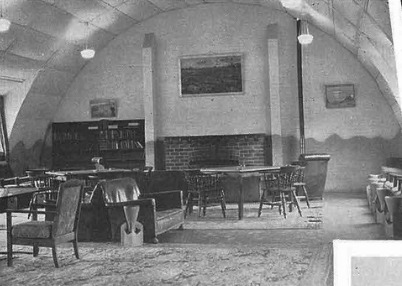
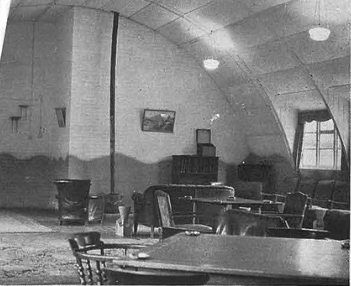
The entrance led into a small lobby, with toilet facilities located within it. From here, a visitor could enter the Card and Reading Room. Images show a well-stocked library of books, and personal stories note that newspapers of the day were also to be found here.
A Christmas drawing created by T/Sgt. Charles L. Thiessen, in civilian life an artist, depicts several groups playing cards around tables and chairs, with a table tennis game in progress. Funds were also raised for the purchase of a piano to be housed within the Officer's Club.
Key Areas
- Entrance lobby
- Toilet facilities
- Card and Reading Room
- Bar and Lounge
- Staff Wing
- Covered walkway to the Foxy Theater
Card & Reading Room
This room offered books, newspapers and space to read, talk and play cards. The surviving imagery suggests a lively but informal setting that could accommodate both quiet time and sociable recreation.
Thiessen's festive drawing is especially valuable here, because it gives a human glimpse of the room in use rather than simply its fabric or layout.
Bar & Lounge
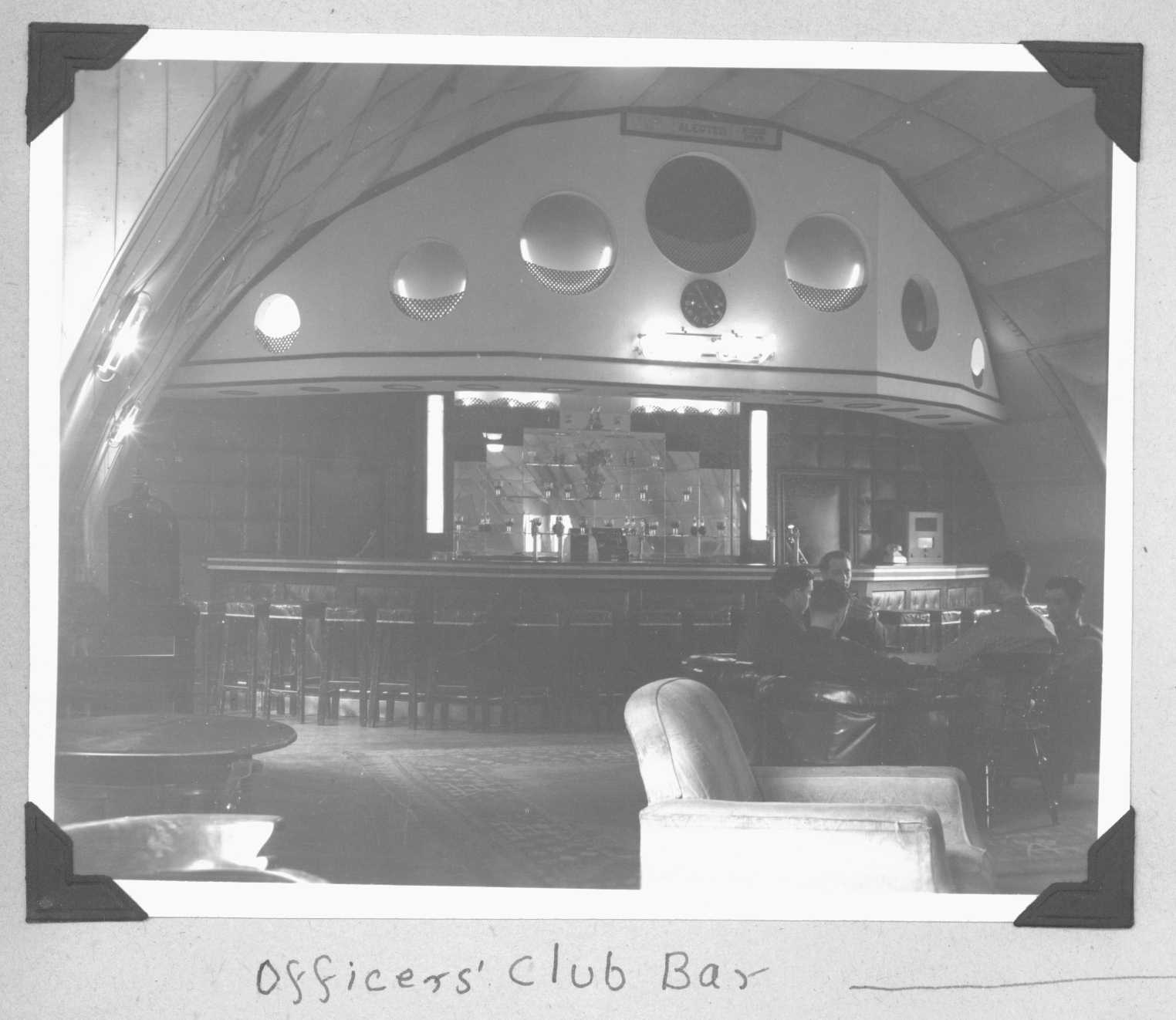
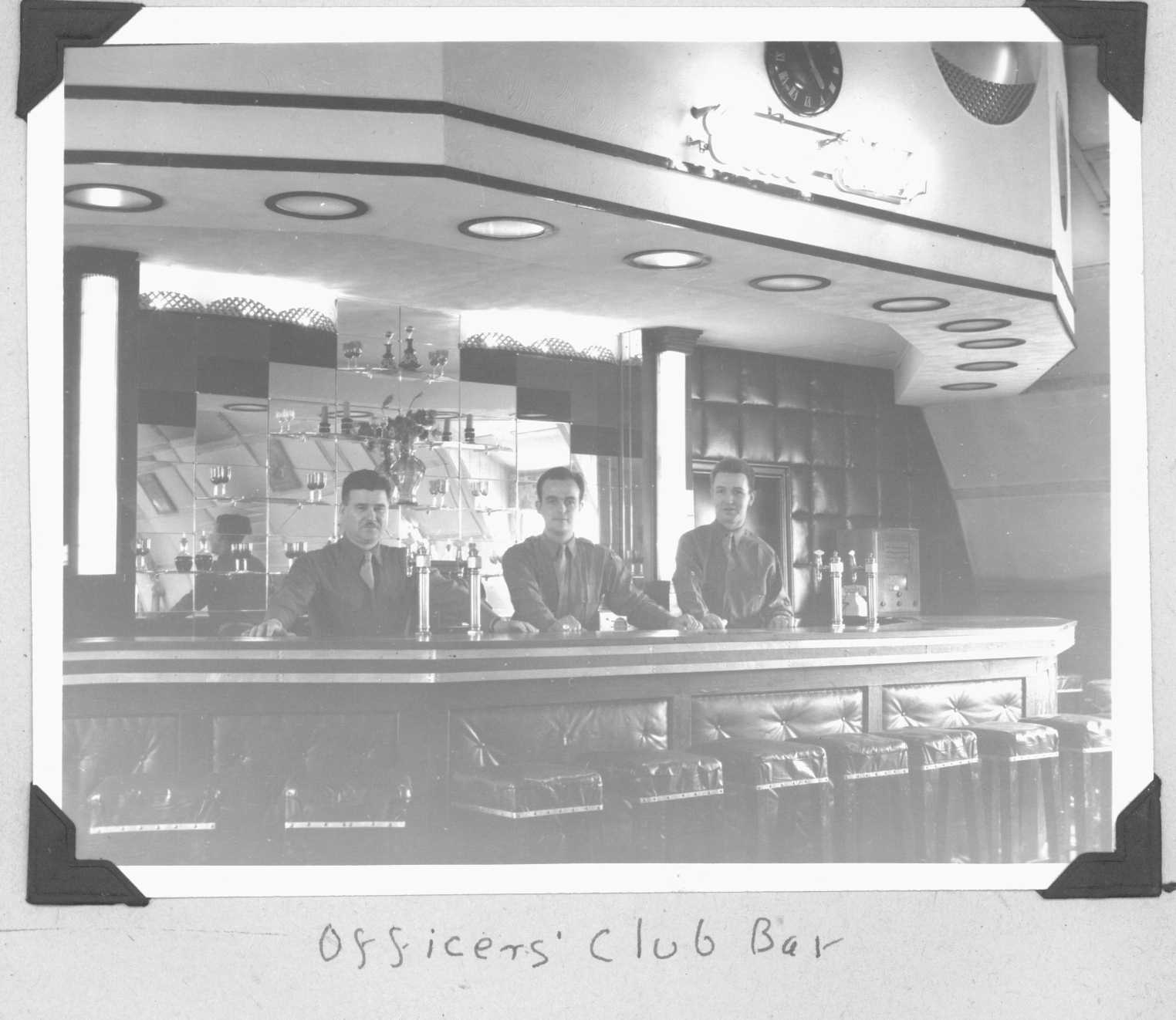
A small corridor from the lobby led to the Bar and Lounge area. Images depict padded seating areas, with the bar positioned at the far end of the room. In time, the space was considerably upgraded with stools placed around a new curved bar.
A further building was added off the back of the bar area, as shown in the plan, perhaps as a simple lean-to store. A separate doorway led outside to a covered wooden walkway and concrete path connecting the Club to the Foxy Theater complex.
Signals in the Bar
Personal memoirs record a light procedure installed at the bar, with the lights turning green to signify a planned mission for the following day.
That simple change in colour must have instantly altered the mood in the room, marking the end of the evening for many officers and reminding everyone how closely leisure and operational duty were intertwined.
Primo Lombardi
One of the most memorable figures associated with the Officer's Club Bar was Sgt. Primo Lombardi. A cook by trade and bar owner in civilian life in Boston, he appears in many images of the bar and at off-site functions such as weddings, often carrying a bottle of some kind of alcoholic beverage.
Lombardi became a trusted confidant of many officers and was remembered fondly by Col. Dale O. Smith. He was later honoured with B-17 #43-39131, "Primo's Gin Mill", which completed 46 combat missions with the 384th.
Staff Wing
The third set of rooms formed a Staff Wing. This suggests that the original structure may also have been intended to house the Officer's Mess, with kitchens and storerooms likely based here at some stage.
At Grafton Underwood the Officer's Mess was ultimately located elsewhere in Grafton Park Wood, but this wing still preserves clues to the Club's earlier or broader intended function.
A Place of Warmth
Over time, the base became home to many dogs and cats drawn by food and shelter. Many strays became adopted pets of personnel and squadron mascots.
On 5 May 1944, the Officer's Club was chosen by one such dog as the place to give birth to her litter of puppies, a small but memorable reminder that the Club offered comfort and safety in more ways than one.
Plans, Layout & Later Alterations
The linked arrangement of lobby, reading room, lounge and staff areas helps explain how the Club balanced privacy with sociability. Visitors could move from formal entry into quieter reading spaces or into the more animated bar environment.
Changes over time, especially in the bar, show that this was not a static building. The new curved counter, bar stools and added rear structure suggest a place that adapted to the social needs of the officers who used it.
The covered walkway linking toward the Foxy Theater also ties the Officer's Club into the wider communal heart of the site, reinforcing how entertainment and daily routine overlapped within Grafton Park Wood.
Today on the Site
Today, the site has started to be cleared and will be cleared further as the year goes on. Even in its current state, there are still clues that reward careful looking.
Near the lobby entrance, an original boot scraper survives. In the toilet areas, visitors may also spot remnants of the porcelain drainage tiles that once served the wash hand basins.
These small survivals help anchor the photographs, plans and memories to the physical ground, allowing the Officer's Club to be read not just as a lost building, but as a place whose fabric still lingers.
Things to Look Out for Today
- The original boot scraper near the lobby entrance.
- Remnants of porcelain drainage tiles from the wash hand basins in the toilet areas.
- The broader layout emerging as the site is gradually cleared.
- The relationship between the Club site and the nearby Foxy Theater complex.
Gallery of the Officers Club
Visit the Officer's Club Site
Standing here today, it is possible to read the Officer's Club as both a social refuge and a disciplined, semi-private extension of airfield life. The surviving traces on the ground make the photographs, drawings and memoirs feel much closer.
Part of the 384th Bombardment Group Museum Heritage Trail