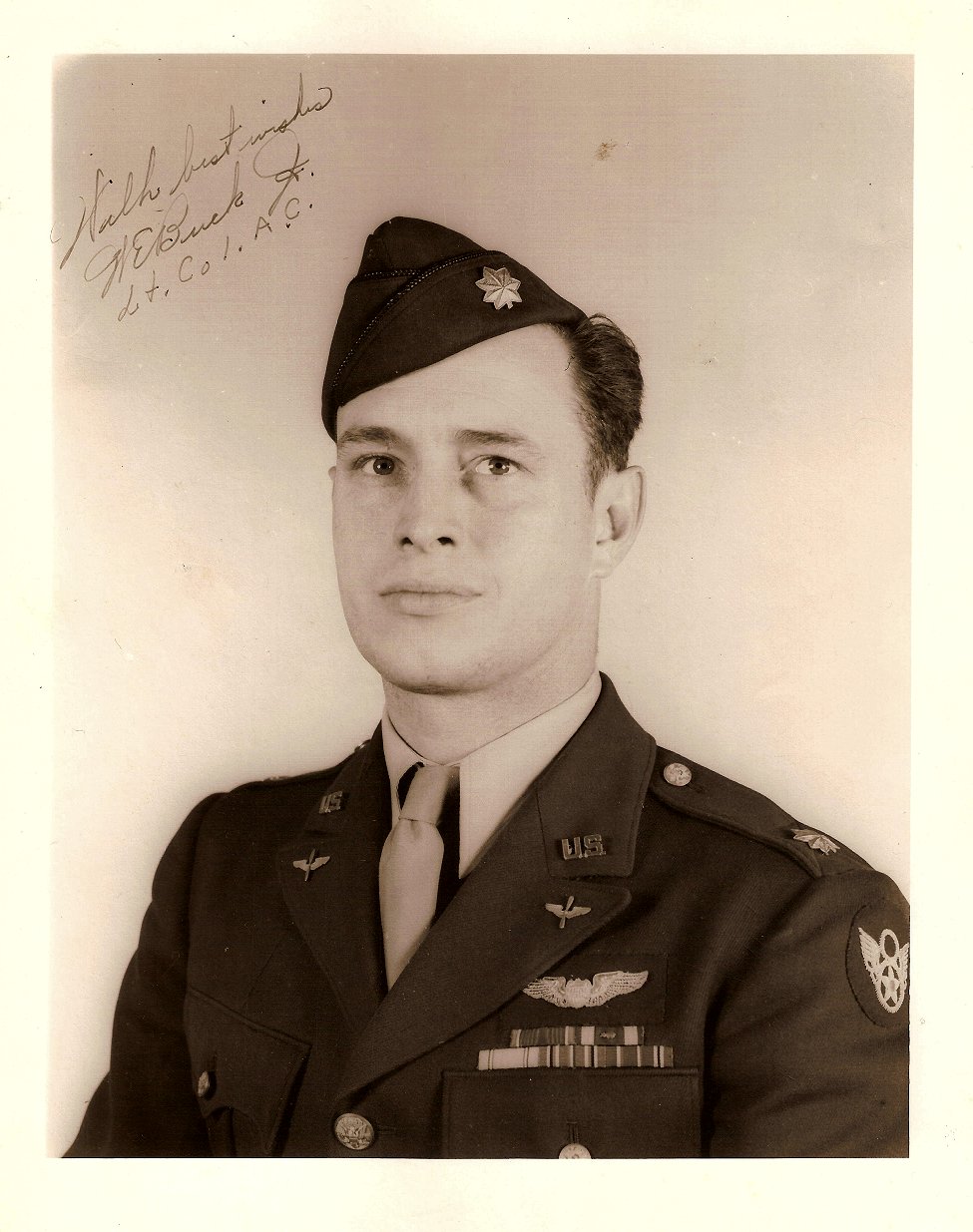
Mission Leader, Lt. Col. William E. Buck, Deputy Group Commander 384th Bomb Group. Photo The Quentin Bland Collection, courtesy of www.384thbombgroup.com
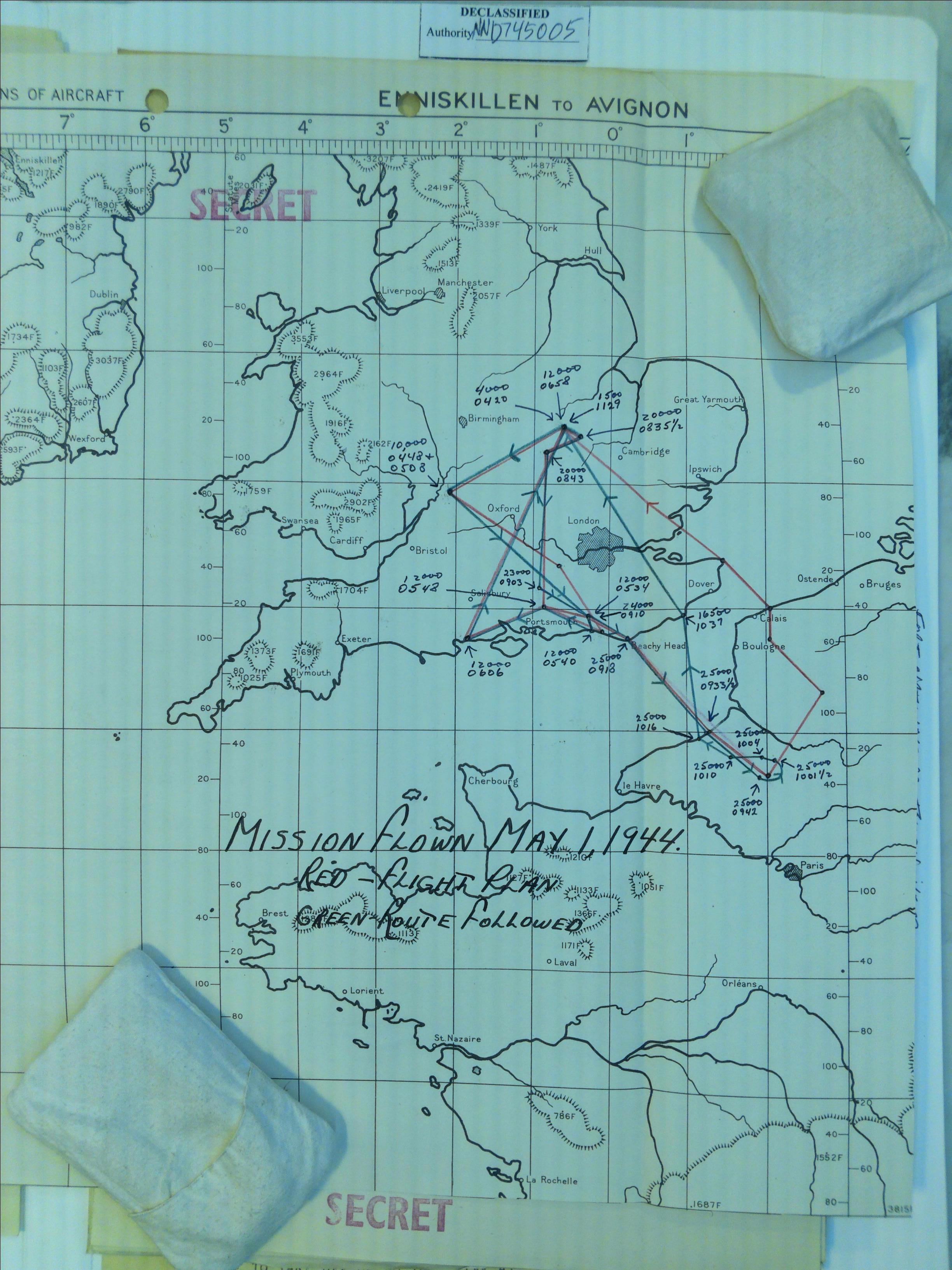
Mission flight plan for Mission #099. Red route shows planned, green route shows actual, highlighting the eventual search for a target of opportunity over France. Image courtesy of www.384thbombgroup.com
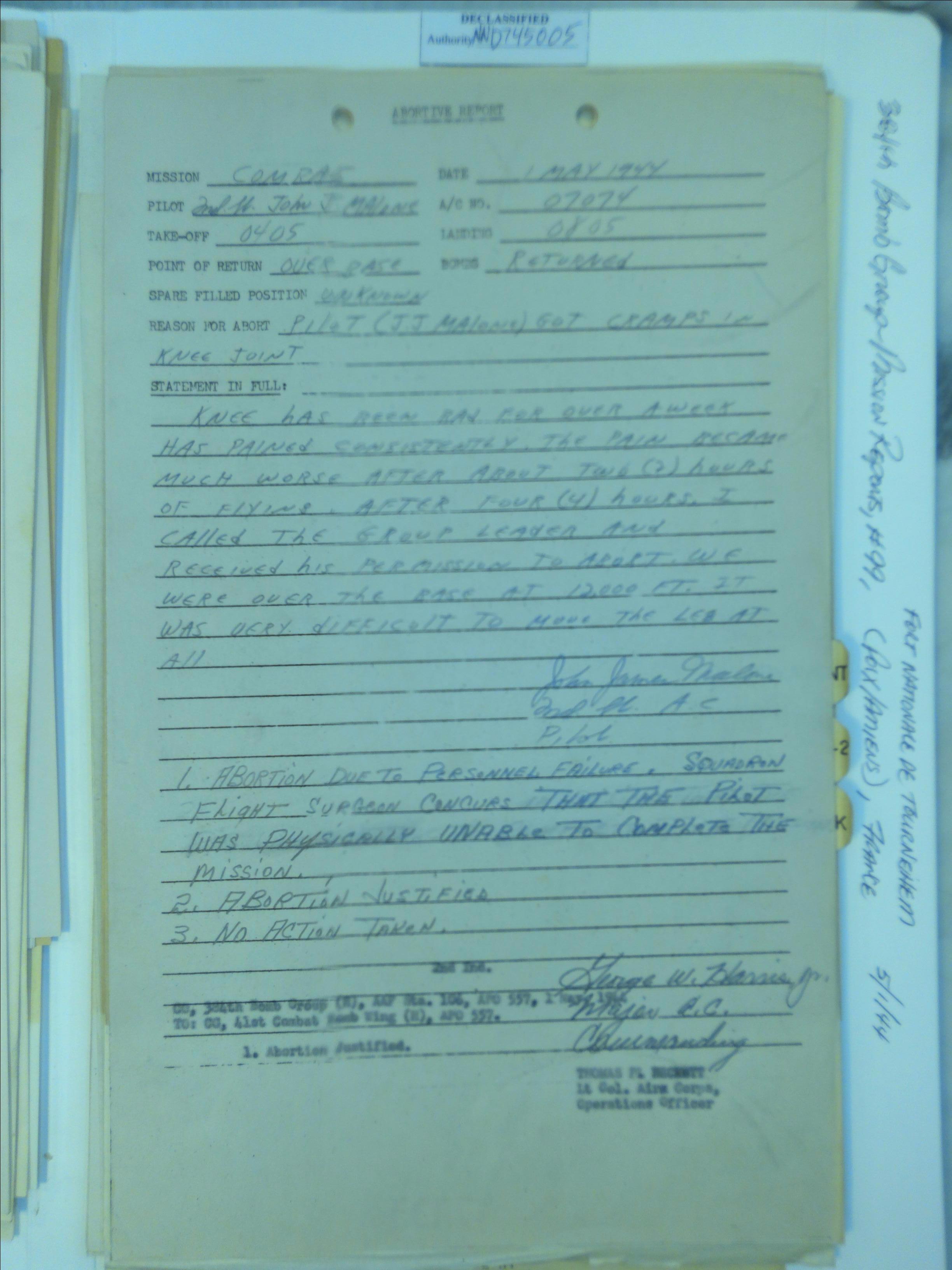
Handwritten 'Abortive Report, completed by pilot of Helena, 2nd Lt. Malone. Image courtesy of www.384thbombgroup.com
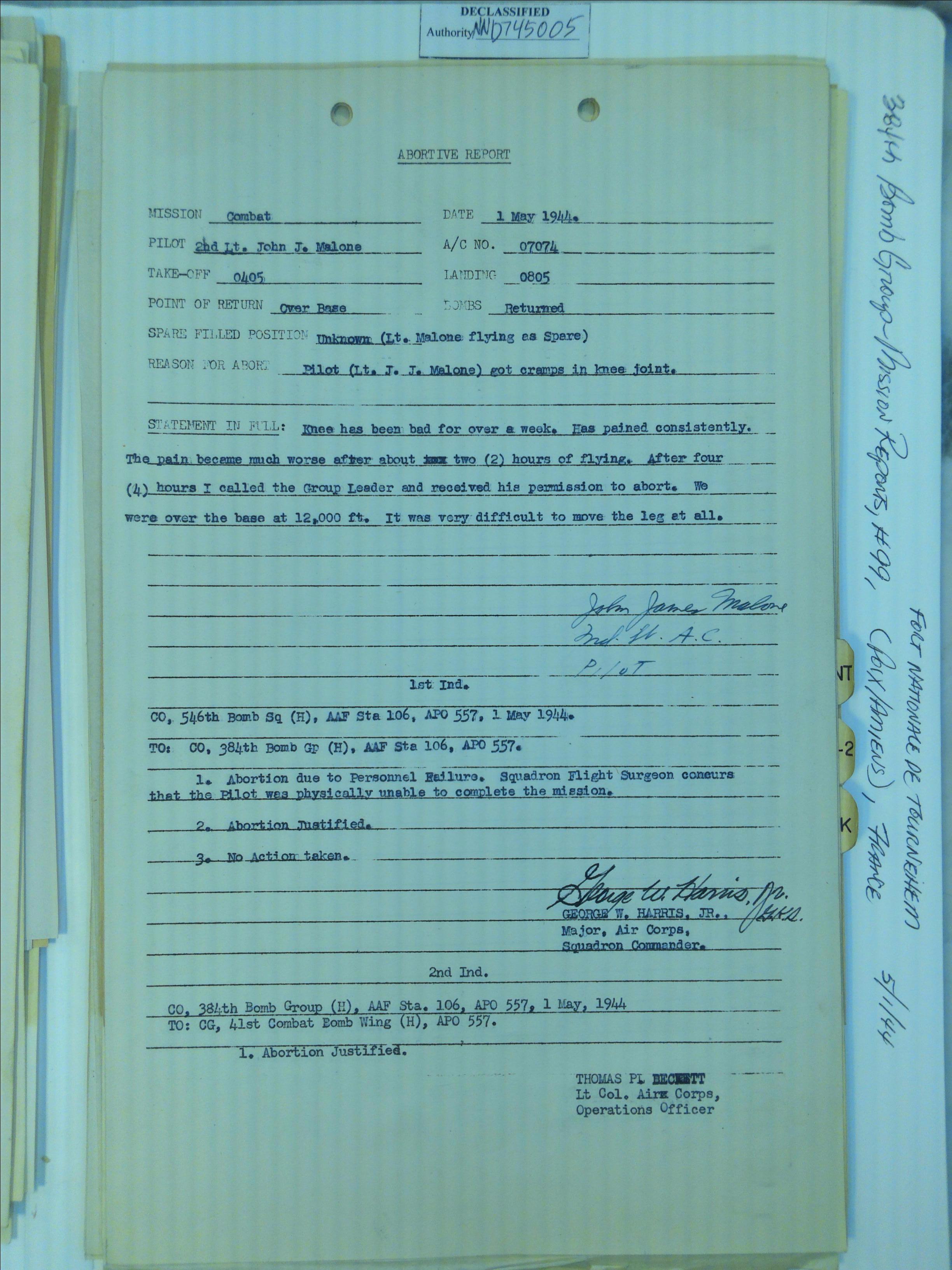
Official 'Abortive Report' regarding the medical issue with 2nd Lt. Malone, aboard B-17 Helena. Note he is medically cleared for the abort. Image courtesy of www.384thbombgroup.com
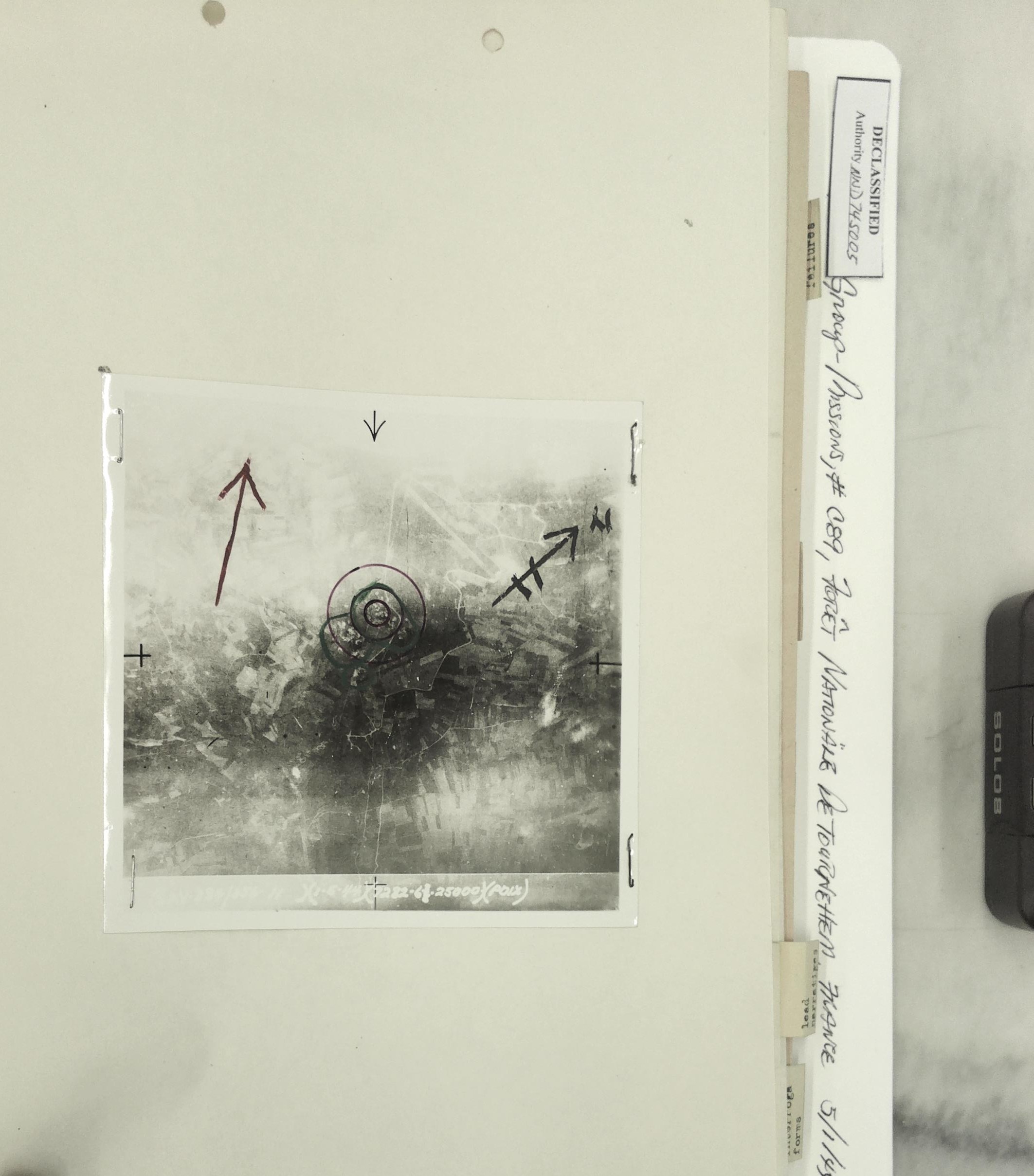
Target image of the original target, the Crossbow site at Foret Nationale de Tournehem, France. Image courtesy of www.384thbombgroup.com
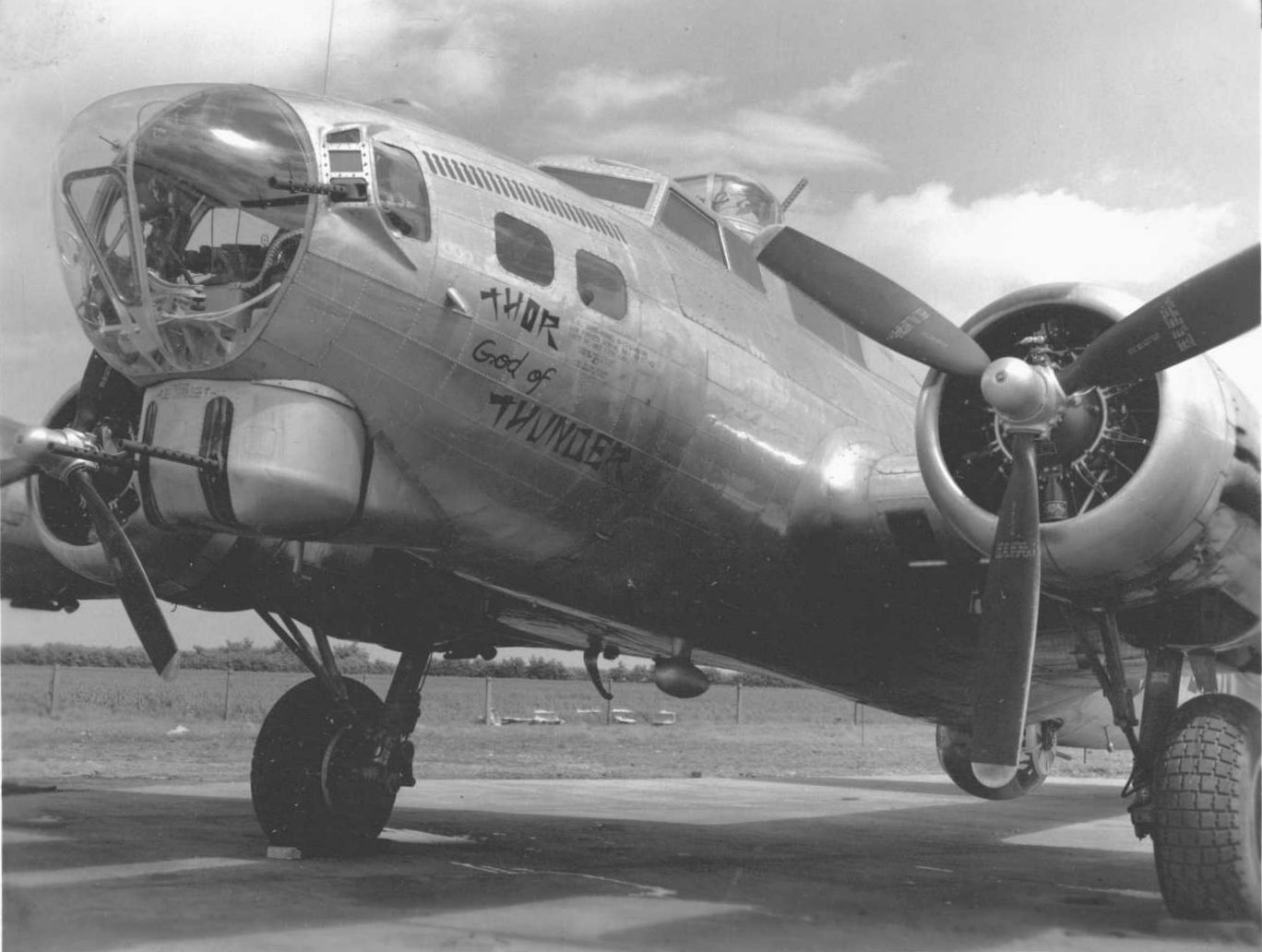
B-17G #42-97142 "Thor, God of Thunder" - weather ship for the mission. Photo courtesy of www.384thbombgroup.com
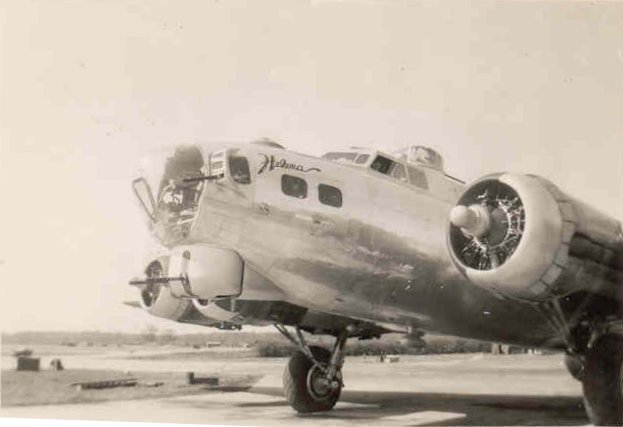
B-17G #42-107074 "Helena", flown by 2nd Lt. Malone - knee cramps forced him to abort the mission over Grafton Underwood, some four hours after the start of the mission. Photo courtesy of www.384thbombgroup.com
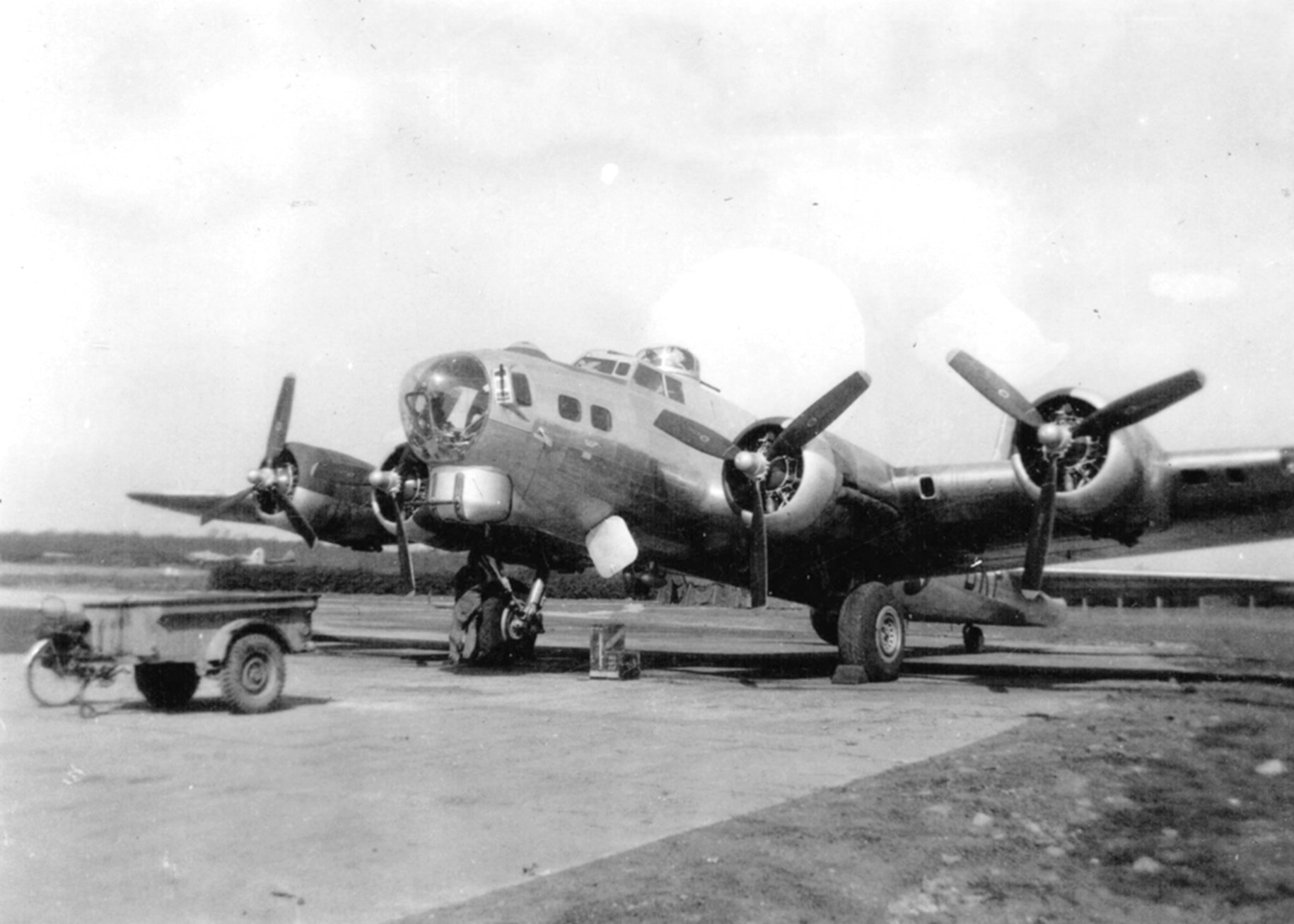
B-17G #42-107074 "Helena"
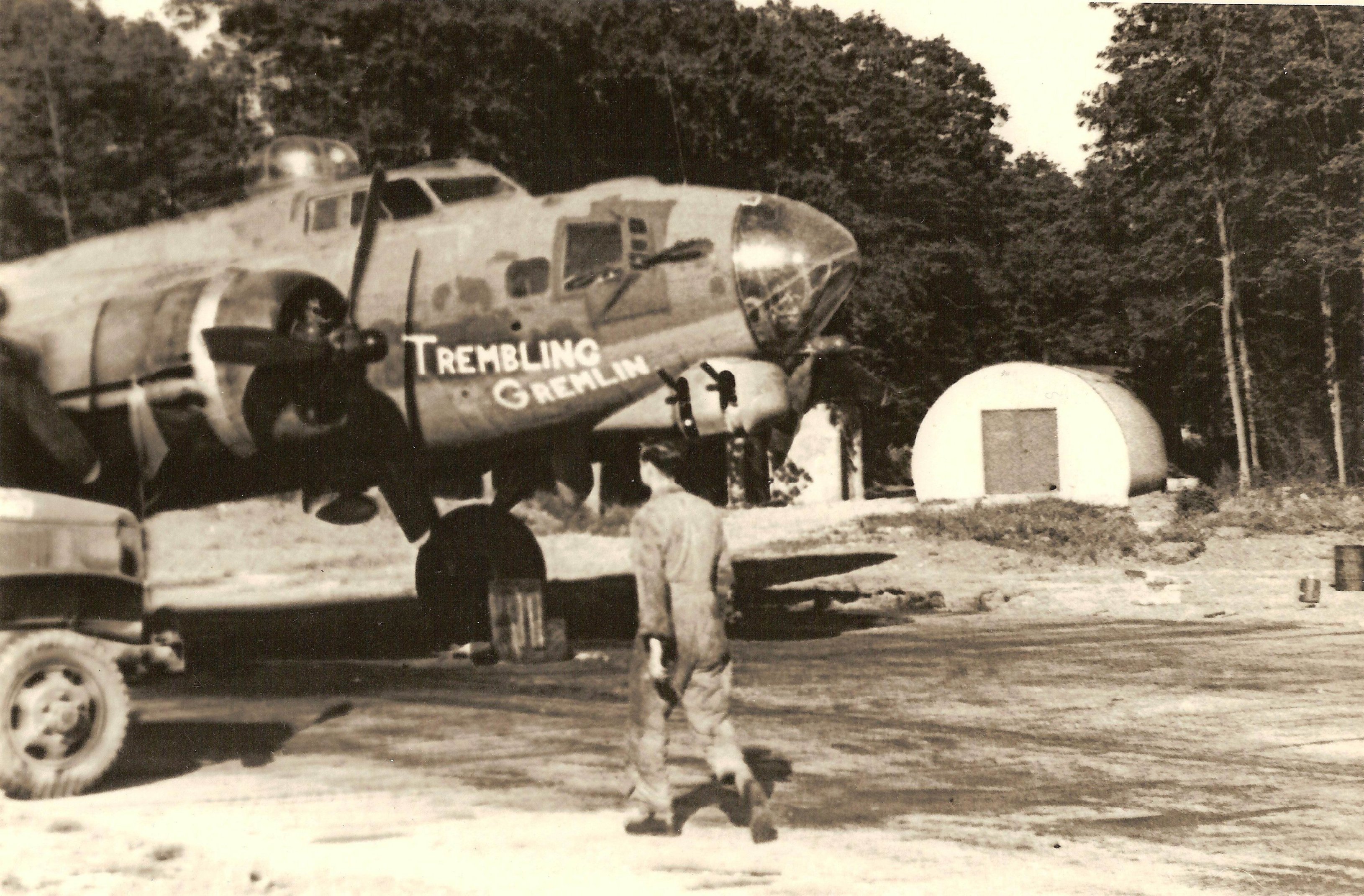
B-17G #42-37982 "Tremblin' Gremlin" - unable to drop its bomb load over the target due to haze/undercast, the aircraft returned to Grafton Underwood with its bomb load intact. Photo courtesy of www.384thbombgroup.com
The Story of Mission # 99
Last updated: September 5, 2026, 6:14 amToday's mission for the 384th was a 'Crossbow' operation - the codename given to any mission directed against V-weapon installations in occupied Europe. The Primary Target was the V-weapon launch site in the Foret Nationale de Tournehem. The 384th Bomb Group was to lead the 41st Combat Wing, with 384th Bomb Group Deputy Commander Lt. Col. William E. Buck in command.
A total of 25 aircraft were assigned to the mission by the 384th Bomb Group, with a very early start planned. Of the 25, 18 were to actual complete the mission. Three aircraft were forced to abort the mission, one aircraft was scrubbed immediately after take off, two aircraft were ground spares that weren't used, with another aircraft making it to the target area but due to weather conditions, was unable to release the bombload and brought them back to base.
B-17G #42-31435 West End was the aircraft forced to scrub the mission after take off, due to an issue with #1 engine. It's place was taken by a ground spare, B-17G #42-37776 Lady Drew - however, by the time this aircraft had taken off and had got half way across the English Channel, it was unable to locate the formation and was thus to return back to Grafton Underwood after jettisoning it's bomb load. It safely landed back at base at 09.30hrs. Also having to abort the mission were B-17G #42-31235 Goin' Dog due to issues with two of its superchargers meaning it could not keep its place in the formation, and also B-17G #42-107074 Helena; Pilot 2nd Lt. John James Malone suffering from severe cramps in his knee which forced the aircraft to return, whilst it was still in the vicinity of the airfield, after being in the air for four hours.
The report from lead Navigator 2nd Lt. Robert Charles Chapin gives a good indication of the length of time aircraft were over England forming up into formation, before actually crossing the enemy coastline. Take off time was from 03.40hrs, with assembly being over the airfield before departing at 04.20hrs for Cheltenham, at 10,000ft. By 05.40hrs the group was heading towards Brighton at 12,000ft. At 07.25hrs the group was at 20,000ft., before returning to Molesworth at 08.35hrs, now flying at an altitude of 20,000ft. They finally crossed the English coastline at Beachy Head at 09.18hrs, at 25,000ft., before eventually crossing the enemy coastline at Belgium by 09.33hrs, at the mission altitude of 25,000ft. - almost six hours since take off from Grafton Underwood.
Upon reaching the target area of Foret Nationale de Tournehem, they found the area obscured by 10/10th's cloud cover. The group circled in the vicinity of the target hoping for a break in the clouds, before heading south towards Poix / Amiens. A hole in the overcast was suddenly spotted, through which the airfield of Poix was visible, as a target of opportunity - the airfield was home to a Luftwaffe night fighter squadron.
At 10.01 from an altitude of 25,000ft the element of eighteen 384th Bomb Group aircraft released their bombload onto the airfield below. Although bomb strikes were noted amongst airfield buildings, generally the result was described as poor with numerous bombs falling into open fields around the airfield. B-17G #42-37982 Tremblin' Gremlin was unable to release its bomb load due to haze and undercast over the target, and it subsequently returned to Grafton Underwood fully loaded.
By 10.16hrs the group crossed back over the enemy coastline, before reaching the English coastline at Dungeness at 10.37hrs, at an altitude of 16,500ft. Grafton Underwood was reached by 11.29hrs at an altitude of 1,500ft, with the first aircraft landing a few minutes later at 11.38hrs.
No flak was encountered during the mission at any point, with just two FW190's observed.
On this day, 531 bombers had initially been despatched to attack a total of 23 Crossbow target sites. Of these only 130 bombers in total were to drop their bombs over targets, of which just 3 Crossbow sites were actually hit. A total of 209 escort fighters, P47's and P51's, escorted the attacking aircraft throughout the mission.
Research courtesy of Keith Andrews on behalf of 384th Bombardment Group Museum.
With kind thanks to the 384th Bomb Group website www.384thbombgroup.com for permission in using material from their records in the making of this story. It holds a wealth of information, documents and photographs of their activities during World War 2.
Gallery
Mission Leader, Lt. Col. William E. Buck, Deputy Group Commander 384th Bomb Group. Photo The Quentin Bland Collection, courtesy of www.384thbombgroup.com
Mission flight plan for Mission #099. Red route shows planned, green route shows actual, highlighting the eventual search for a target of opportunity over France. Image courtesy of www.384thbombgroup.com
Handwritten 'Abortive Report, completed by pilot of Helena, 2nd Lt. Malone. Image courtesy of www.384thbombgroup.com
Official 'Abortive Report' regarding the medical issue with 2nd Lt. Malone, aboard B-17 Helena. Note he is medically cleared for the abort. Image courtesy of www.384thbombgroup.com
Target image of the original target, the Crossbow site at Foret Nationale de Tournehem, France. Image courtesy of www.384thbombgroup.com
B-17G #42-97142 "Thor, God of Thunder" - weather ship for the mission. Photo courtesy of www.384thbombgroup.com
B-17G #42-107074 "Helena", flown by 2nd Lt. Malone - knee cramps forced him to abort the mission over Grafton Underwood, some four hours after the start of the mission. Photo courtesy of www.384thbombgroup.com
B-17G #42-107074 "Helena"
B-17G #42-37982 "Tremblin' Gremlin" - unable to drop its bomb load over the target due to haze/undercast, the aircraft returned to Grafton Underwood with its bomb load intact. Photo courtesy of www.384thbombgroup.com