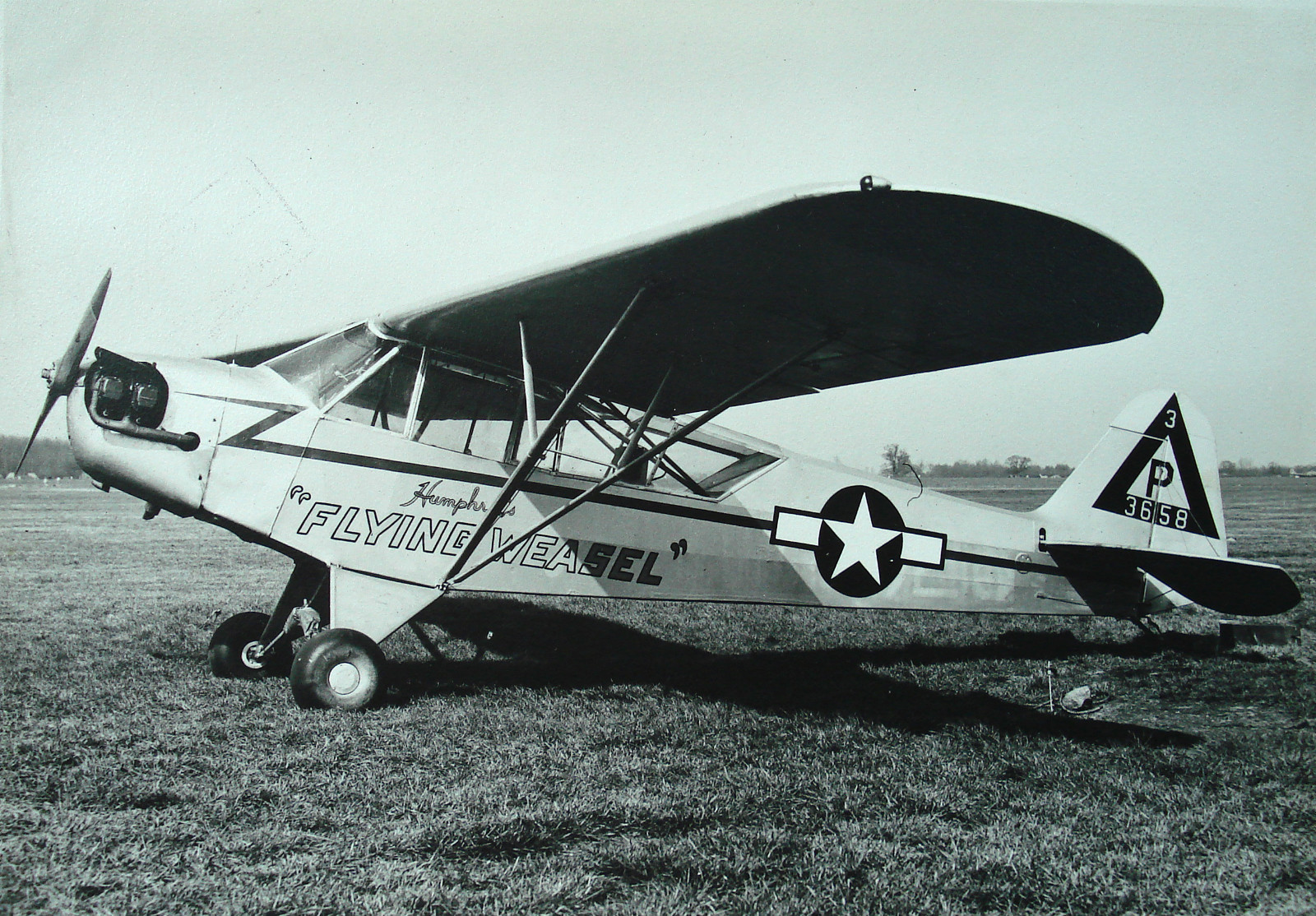
Piper L-4B Grasshopper, "Humphrie's Wild Weasel". Photo courtesy of www.384thbombgroup.com
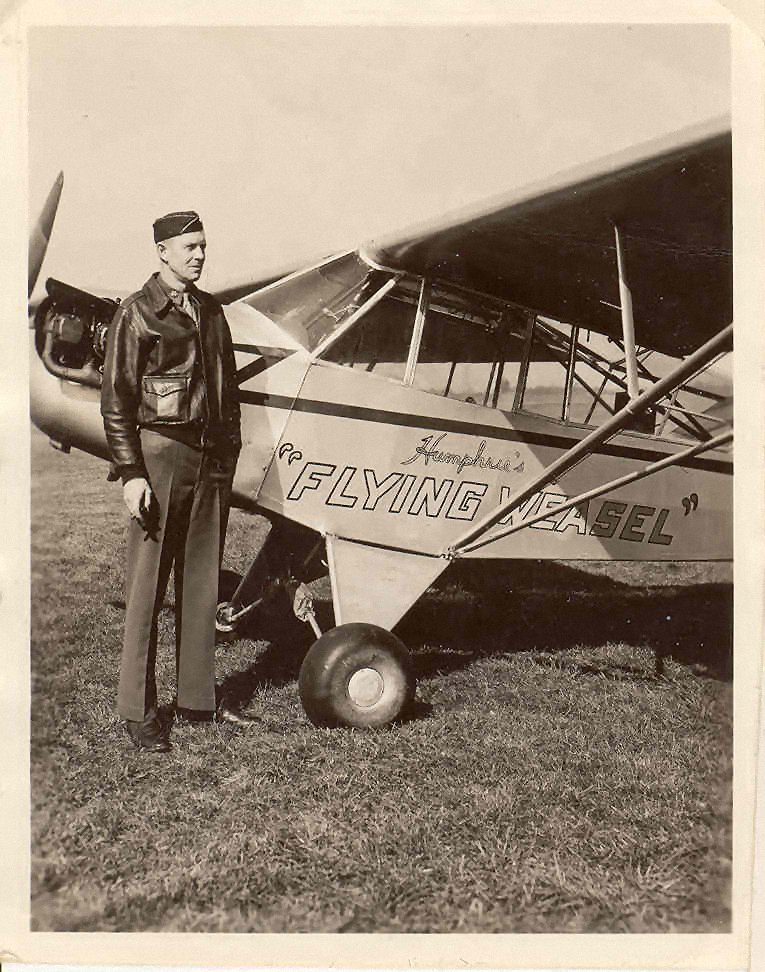
Maj John H. Humphries, standing by #43-658. Whether the name is linked to him directly is unclear. Photo courtesy of www.384thbombgroup.com
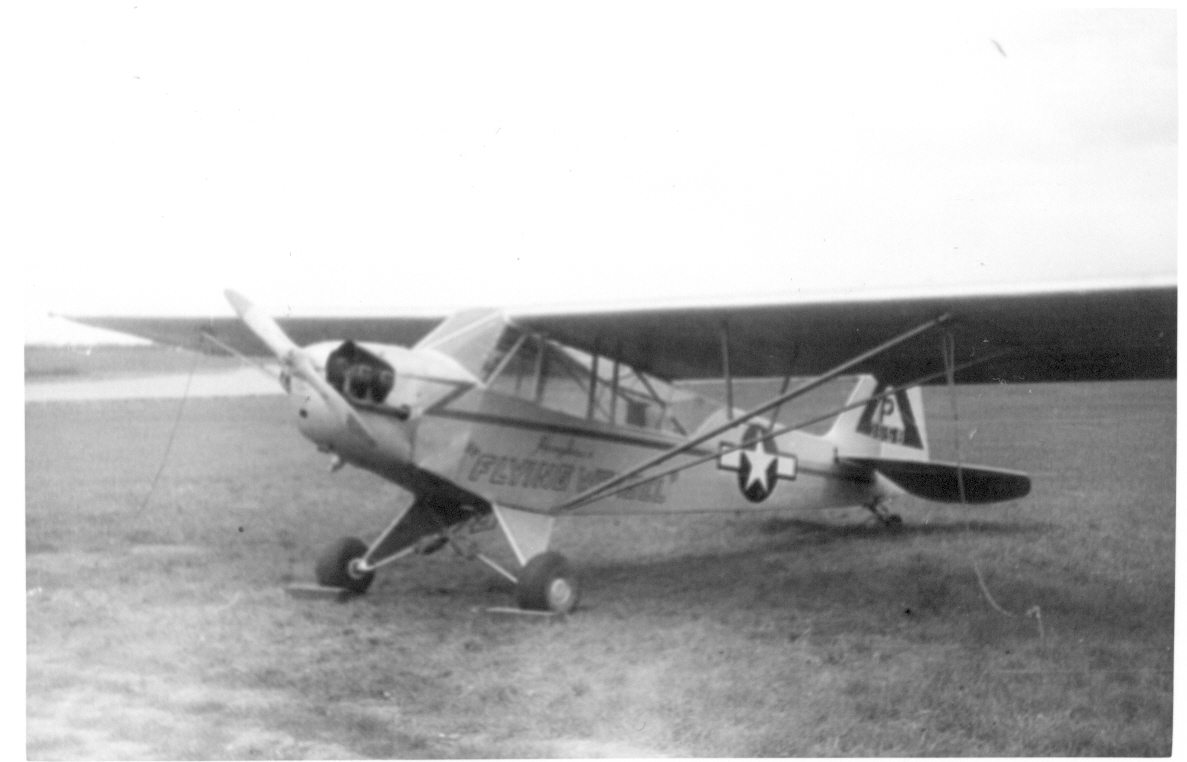
384th Bomb Group Piper L-4B Grasshopper "Humphrie's Wild Weasel". Photo courtesy of www.384thbombgroup.com
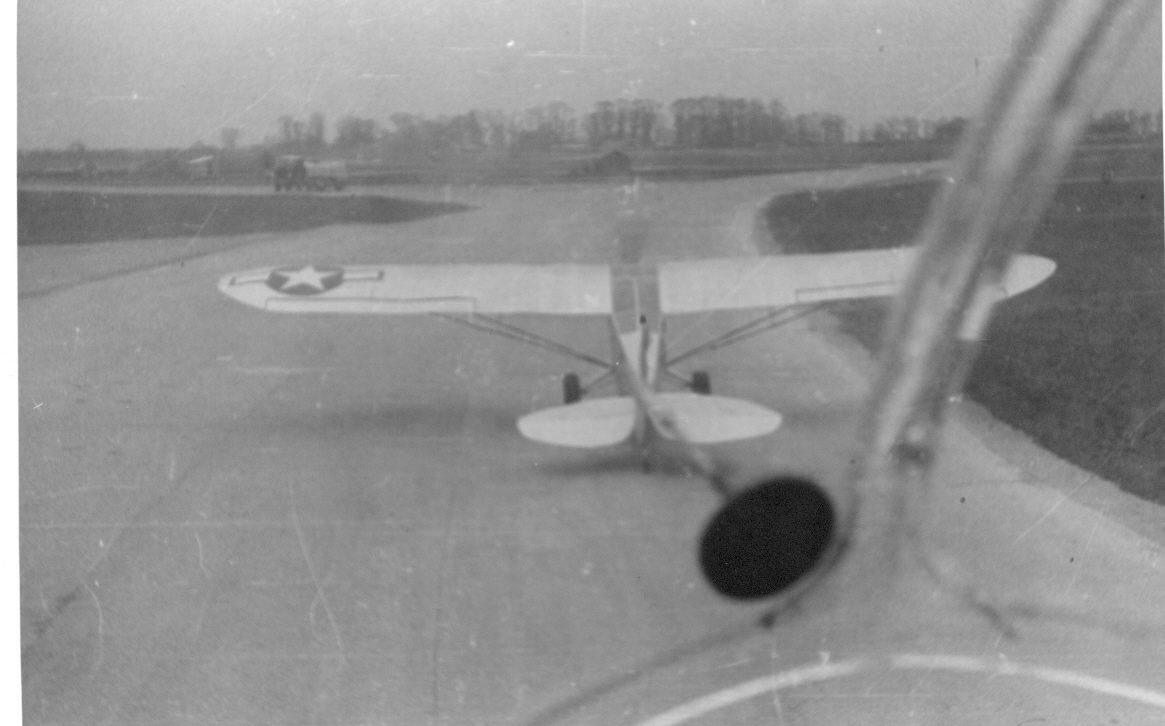
384th Bomb Group Piper L-4B Grasshopper "Humphrie's Wild Weasel", on taxiway - photo taken from bomb aimers position in a B-17. Photo courtesy of www.384thbombgroup.com
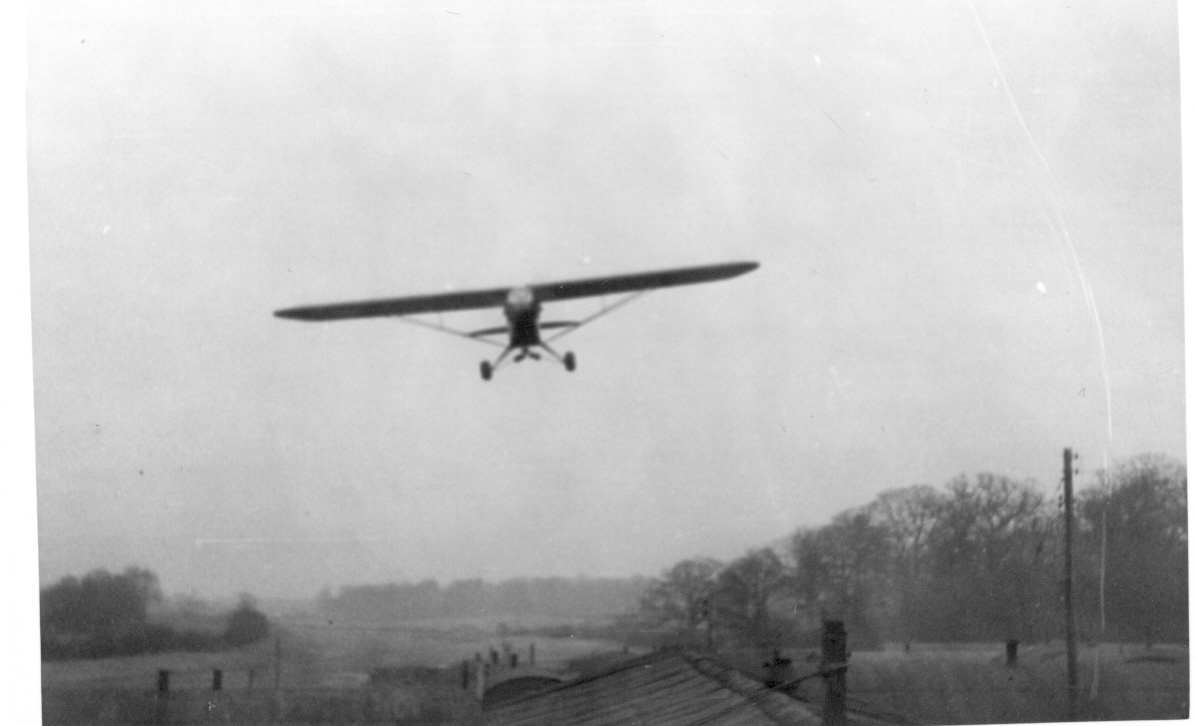
Unidentified L-4 buzzing the 546th Bomb Squadron site. It isn't clear if this relates directly to the crash on 30th June 1944. Photo courtesy of www.384thbombgroup.com

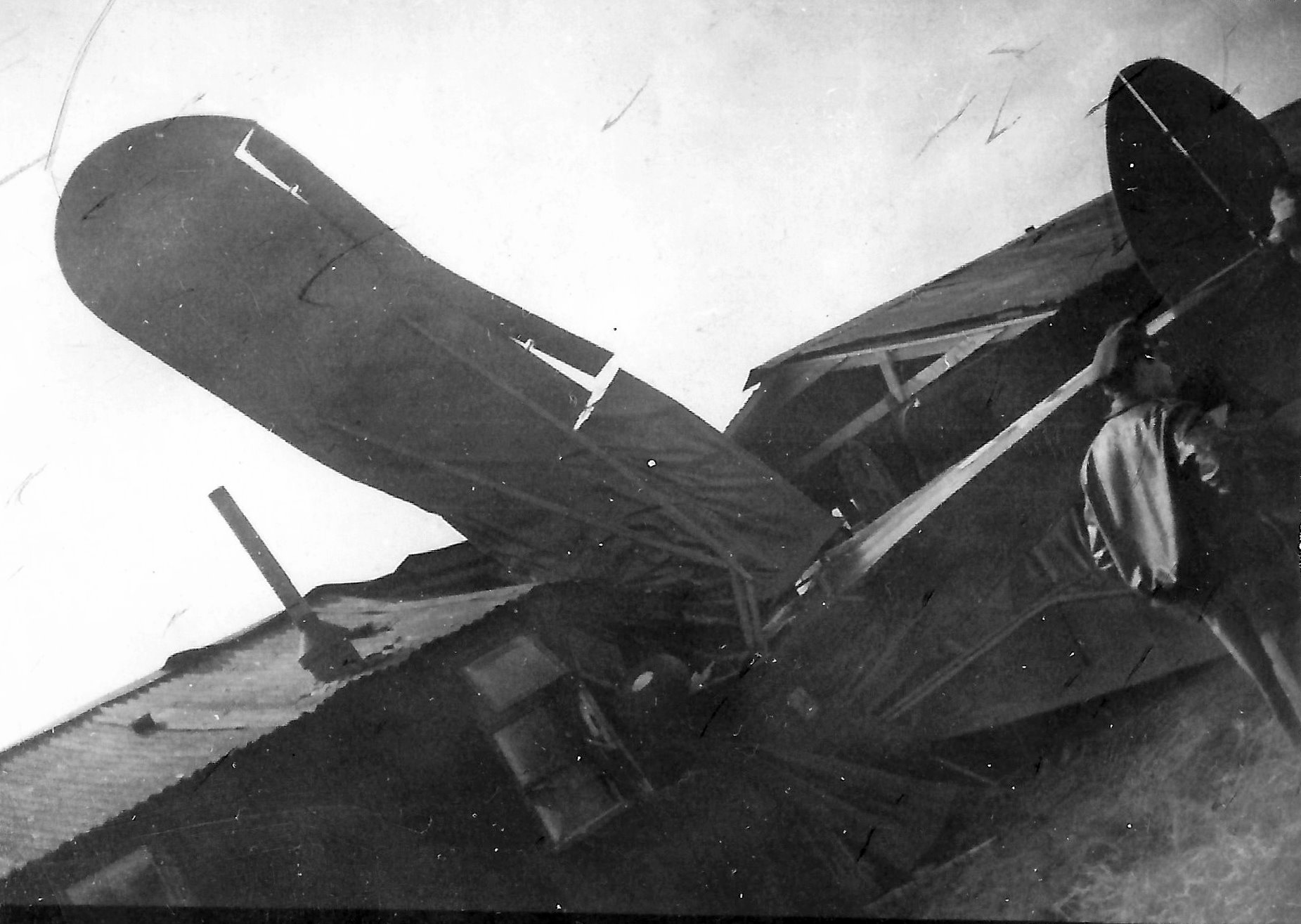
Piper L-4 Grasshopper embedded into the side of a 546th Barrack building, 30th June 1944. Photo Ken Decker, courtesy of www.384thbombgroup.com
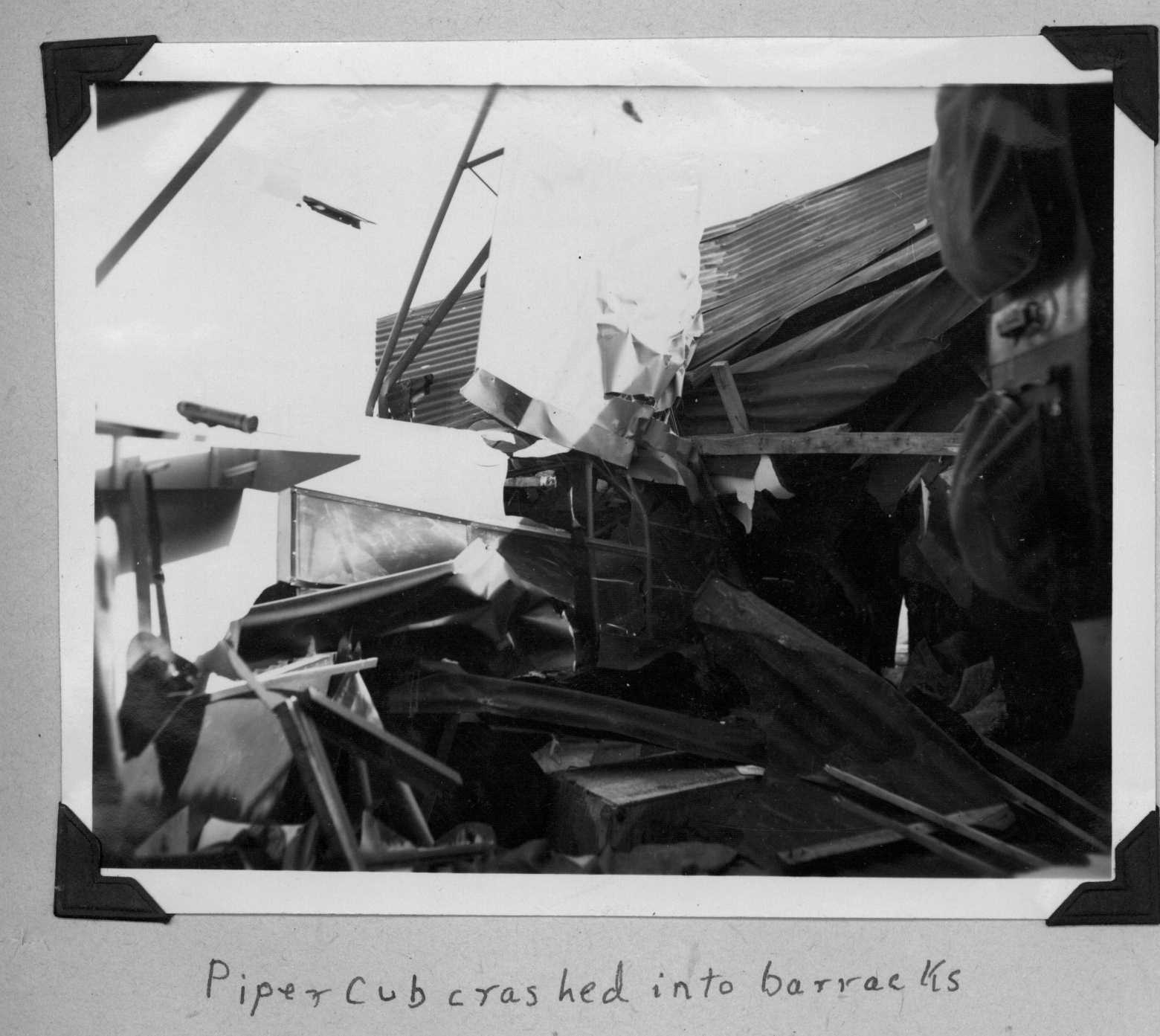
Piper L-4 Grasshopper embedded into the side of a 546th Barrack building, 30th June 1944. Photo Robert Bletscher, courtesy of www.384thbombgroup.com
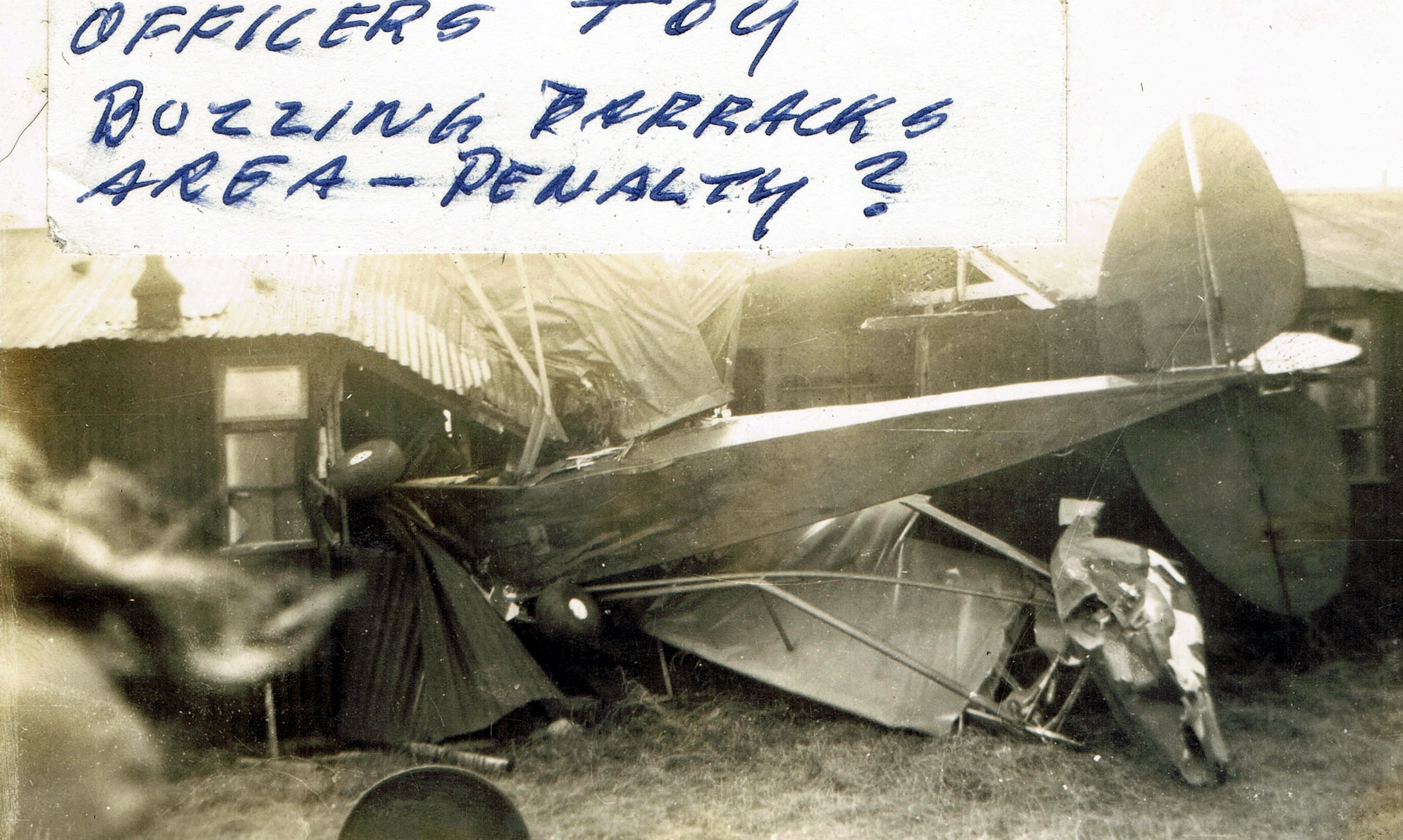
Crash site from 30th June 1944. Photo Debbie Anderson, c/o Frank Priesnitz, 546th crew chief. Courtesy of www.384thbombgroup.com
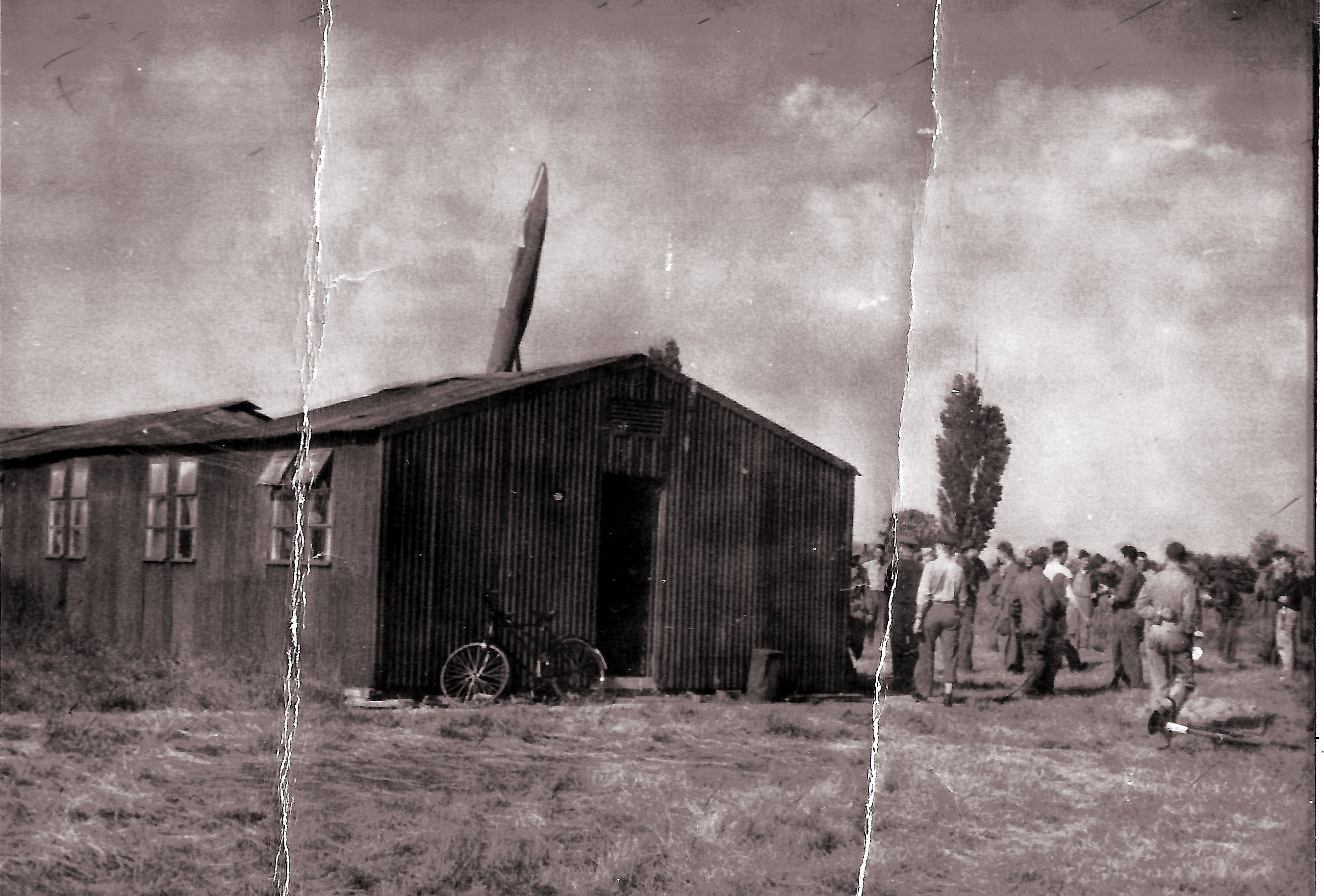
Side view of barracks, showing the remains of the Grasshopper. Photo family of Don Bagby, courtesy of www.384thbombgroup.com

Internal shot of the crash site, note the shattered wooden propellor of the Piper L-4 Grasshopper. The pilot was able to walk away uninjured, there were no casualties on the ground. Photo familiy of Don Bagby, courtesy of www.384thbombgroup.com

A crowd survey the wrecked aircraft and damage to the barrack block. The background of the image identifies this as building #484, site 11, 546th Bomb Squadron. Photo family of Don Bagby, courtesy of www.384thbombgroup.com
Crash site from 30th June 1944. Photo family of Don Bagby, courtesy of www.384thbombgroup.com
Other aircraft of the 384th - Piper L-4B Grasshopper
The 384th Bomb Group is synonymous with the B-17 Flying Fortress. However, during their time at Grafton Underwood, it would have been common to see some other types being operated by the Group, primarily in liaison flights with other 8th Air Force airfields, and possibly on some local 'excursions'.
One such aircraft was the Piper L-4B Grasshopper, #43-658 "Humphrie's Flying Weasel".
The L-4 Grasshopper was the military built version of the popular 1930's Taylor E-2 Cub. The nickname 'Grasshopper' seems to have been given after a L-4 was spotted coming to a bouncing halt, like a 'grasshopper'. Despite this new name, the name 'Cub' never truly disappeared from use!
The Grasshopper was introduced to the USAAF in 1942. It's simple yet rugged design, ease of maintenance and the ability to operate from, and land at, remote and rough sites was valuable. Thousands were produced for military use, some of these eventually filtered through to individual Groups, with most units having one on their inventory.
The aircraft operated by the 384th Bomb Group flying out of Grafton Underwood wore distinctive markings. Called "Humphrie's Flying Weasel", there are images of Major John H. Humphries standing by the aircraft - whether the name was directly linked to him is unclear.
An incident involving a Piper L-4 Cub on 30th June 1944 was widely recorded, both by photographs and in written records. An unnamed pilot, in attempting to buzz one of the 546th barrack buildings, inadvertently ended up crashing the aircraft into the side of the structure - the cause of this accident isn't recorded. Whilst no harm came to either the pilot or anyone on the ground, two 546th pilots who had just returned from the days mission to Montdidier narrowly avoided disaster. Lt. Charles Gowder managed to throw himself out of harms way, as did Lt. Wilbur Shearer, who did however suffer a cut to his neck from one of the Cub's wire struts - this resulted in a short hospital stay for Lt. Shearer.
From photographs of the crash, this does not appear to be "Humphrie's Wild Weasel" though, due to the colour of the aircraft wings and fuselage that can be seen.
Engine - Continental O-170-3, 65hp
Wing span - 35ft 3in. (10.74 metres)
Length - 22ft 5in. (6.83 metres)
Empty weight - 730lbs (331 kgs)
Max. Weight - 1,220lbs (553 kgs)
Max. speed - 90mph (145 km/h)
Range - 300 miles (483 km/h)
Crew - 2, pilot and passenger
Research courtesy of Keith Andrews on behalf of 384th Bombardment Group Museum.
With kind thanks to the 384th Bomb Group website www.384thbombgroup.com for permission in using material from their records in the making of this story. It holds a wealth of information, documents and photographs of their activities during World War
Gallery
Piper L-4B Grasshopper, "Humphrie's Wild Weasel". Photo courtesy of www.384thbombgroup.com
Maj John H. Humphries, standing by #43-658. Whether the name is linked to him directly is unclear. Photo courtesy of www.384thbombgroup.com
384th Bomb Group Piper L-4B Grasshopper "Humphrie's Wild Weasel". Photo courtesy of www.384thbombgroup.com
384th Bomb Group Piper L-4B Grasshopper "Humphrie's Wild Weasel", on taxiway - photo taken from bomb aimers position in a B-17. Photo courtesy of www.384thbombgroup.com
Unidentified L-4 buzzing the 546th Bomb Squadron site. It isn't clear if this relates directly to the crash on 30th June 1944. Photo courtesy of www.384thbombgroup.com
Piper L-4 Grasshopper embedded into the side of a 546th Barrack building, 30th June 1944. Photo Ken Decker, courtesy of www.384thbombgroup.com
Piper L-4 Grasshopper embedded into the side of a 546th Barrack building, 30th June 1944. Photo Robert Bletscher, courtesy of www.384thbombgroup.com
Crash site from 30th June 1944. Photo Debbie Anderson, c/o Frank Priesnitz, 546th crew chief. Courtesy of www.384thbombgroup.com
Side view of barracks, showing the remains of the Grasshopper. Photo family of Don Bagby, courtesy of www.384thbombgroup.com
Internal shot of the crash site, note the shattered wooden propellor of the Piper L-4 Grasshopper. The pilot was able to walk away uninjured, there were no casualties on the ground. Photo familiy of Don Bagby, courtesy of www.384thbombgroup.com
A crowd survey the wrecked aircraft and damage to the barrack block. The background of the image identifies this as building #484, site 11, 546th Bomb Squadron. Photo family of Don Bagby, courtesy of www.384thbombgroup.com
Crash site from 30th June 1944. Photo family of Don Bagby, courtesy of www.384thbombgroup.com