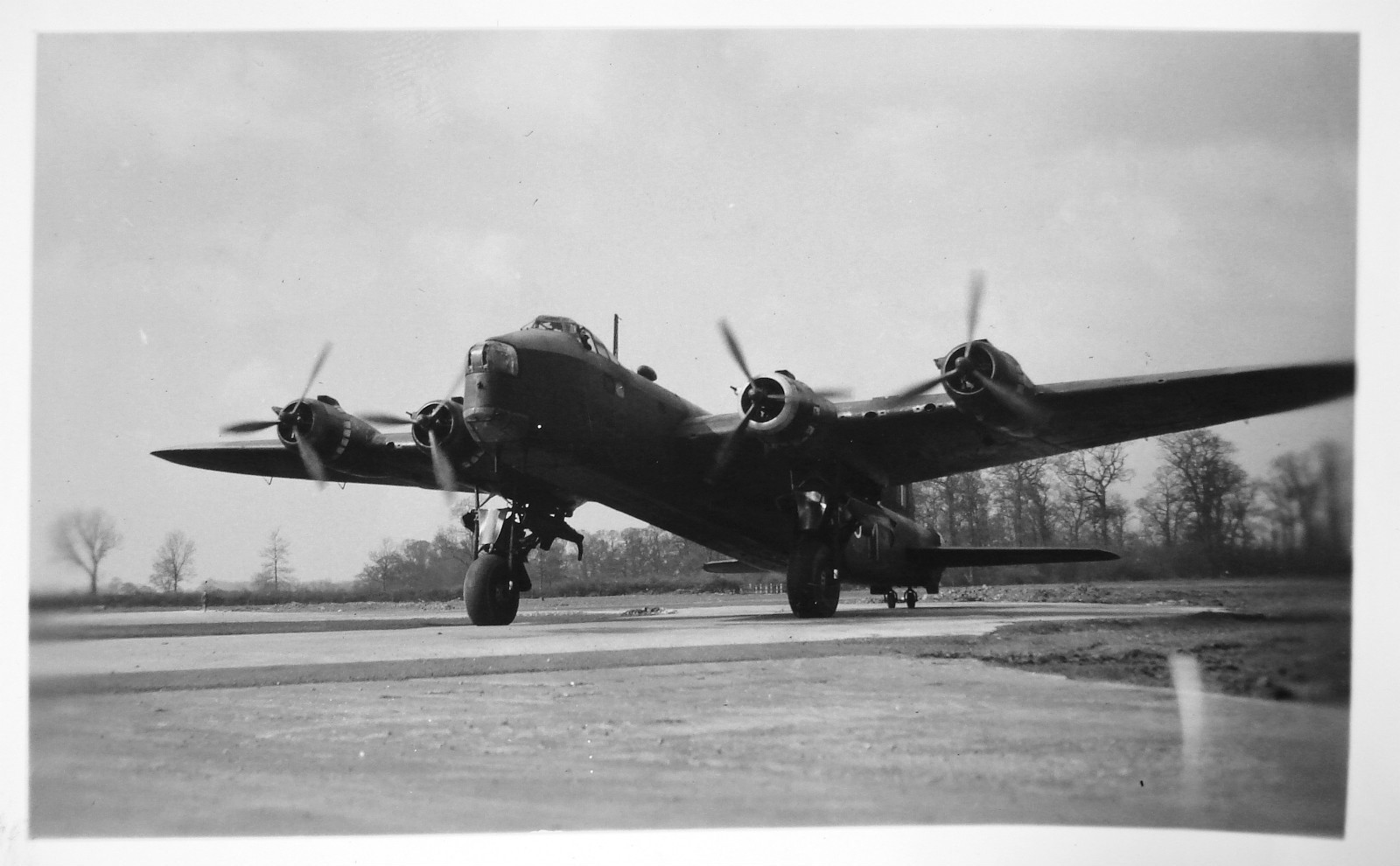
Short Stirling XT-M, 1657 HCU RAF, at Grafton Underwood. Photo Tony Plowright, courtesy of www.384thbombgroup.com
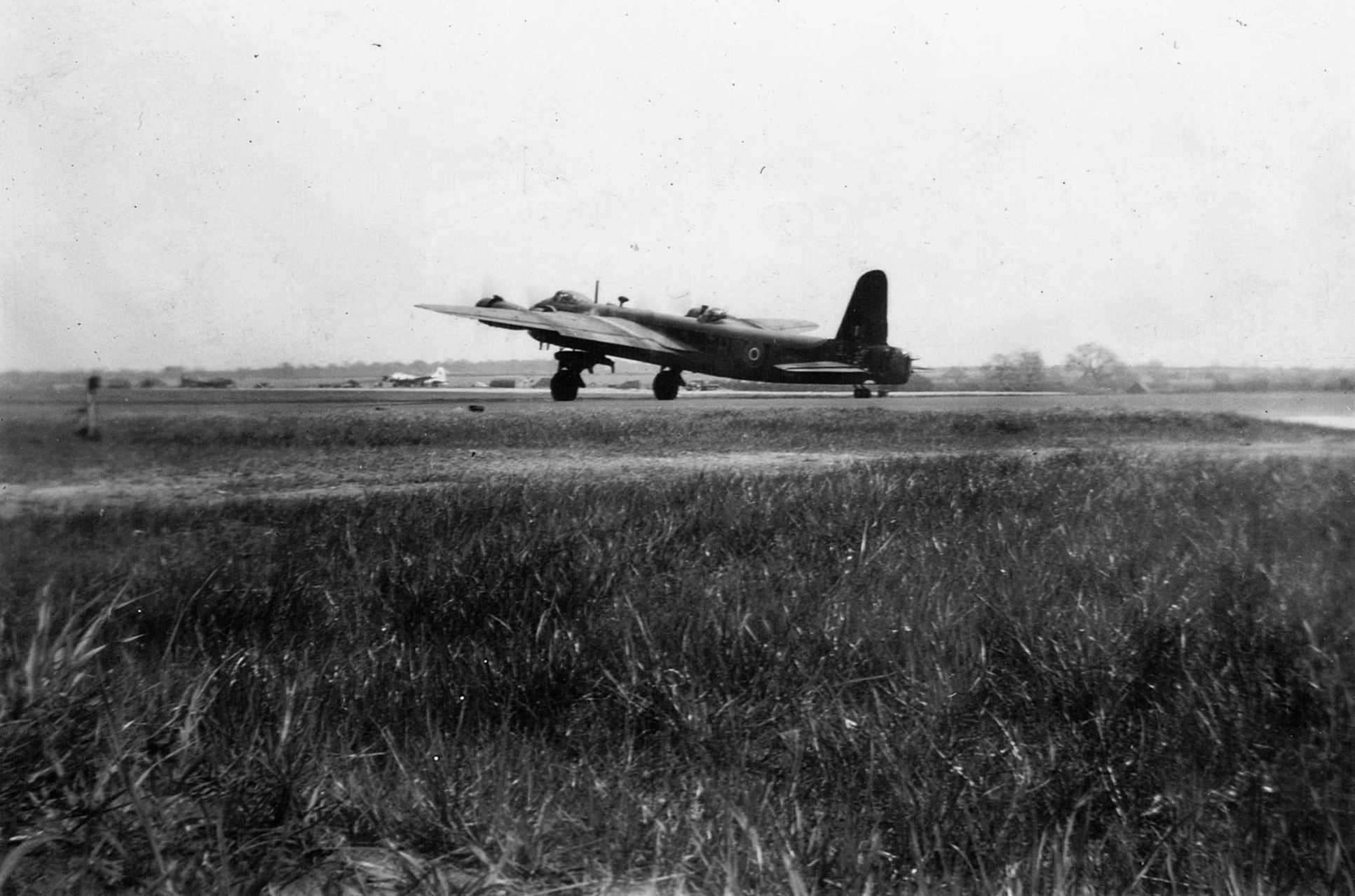
Short Stirling XT-M, 1657 HCU RAF, at Grafton Underwood. Photo Tony Plowright, courtesy of www.384thbombgroup.com
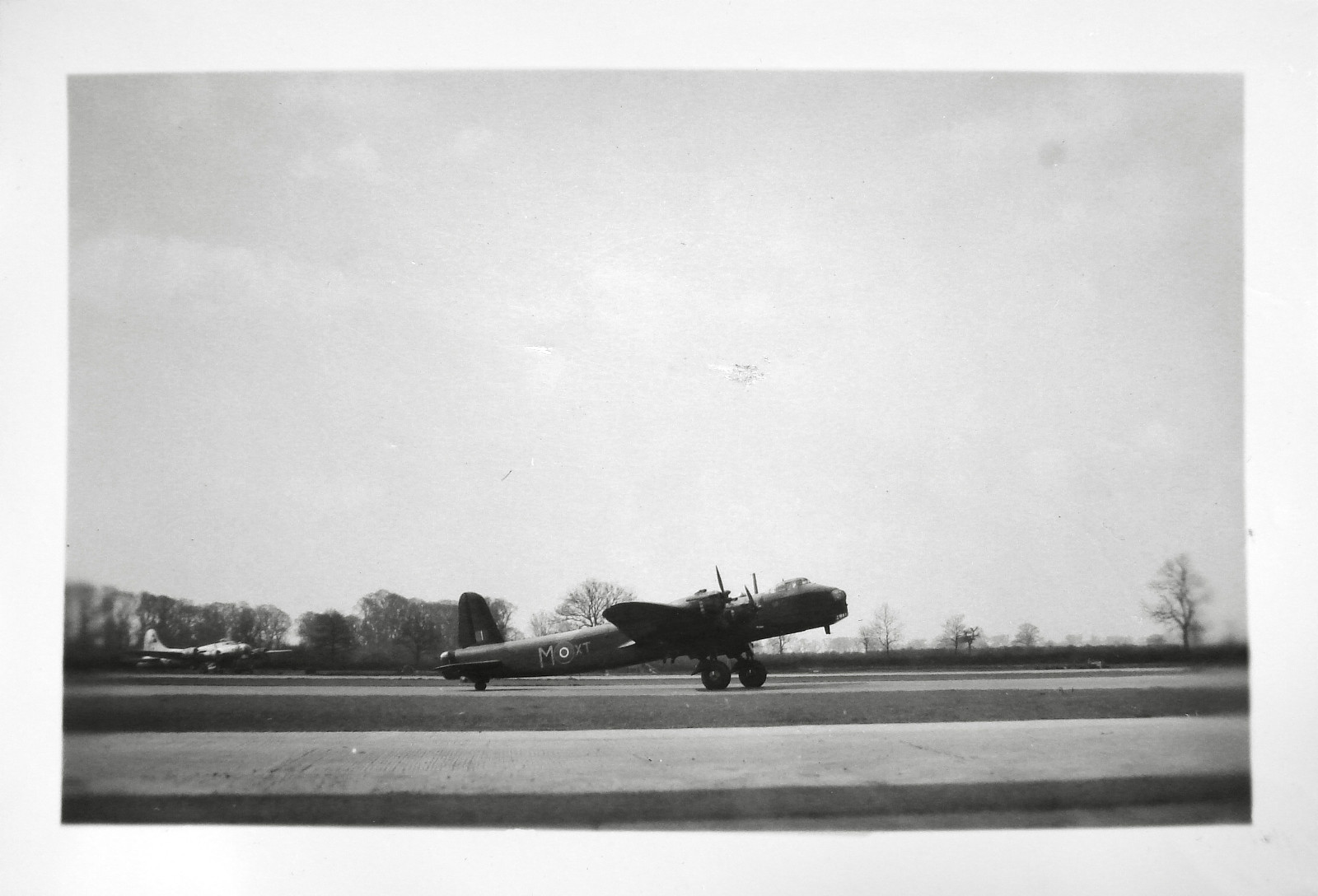
Short Stirling XT-M, 1657 HCU RAF, at Grafton Underwood. Photo Tony Plowright, courtesy of www.384thbombgroup.com
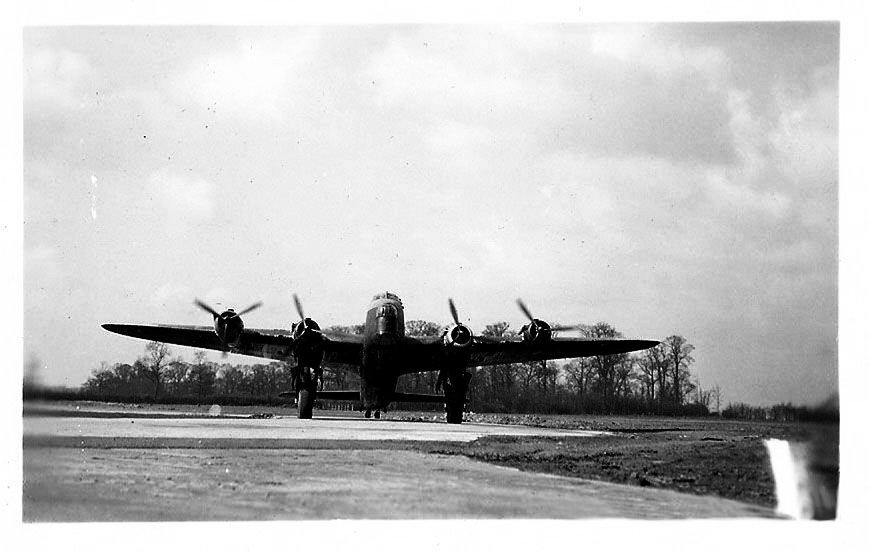
Short Stirling XT-M, 1657 HCU RAF, at Grafton Underwood. Photo Tony Plowright, courtesy of www.384thbombgroup.com
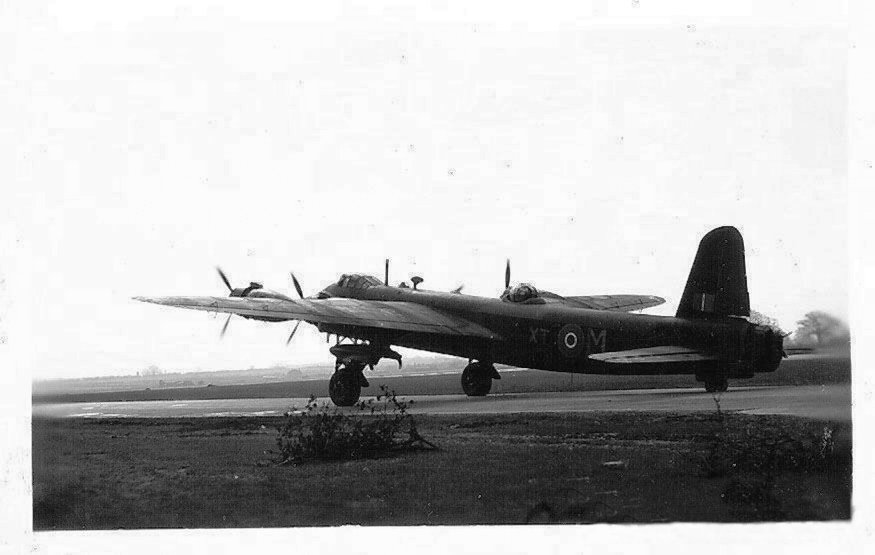
Short Stirling XT-M, 1657 HCU RAF, at Grafton Underwood. Photo Tony Plowright, courtesy of www.384thbombgroup.com
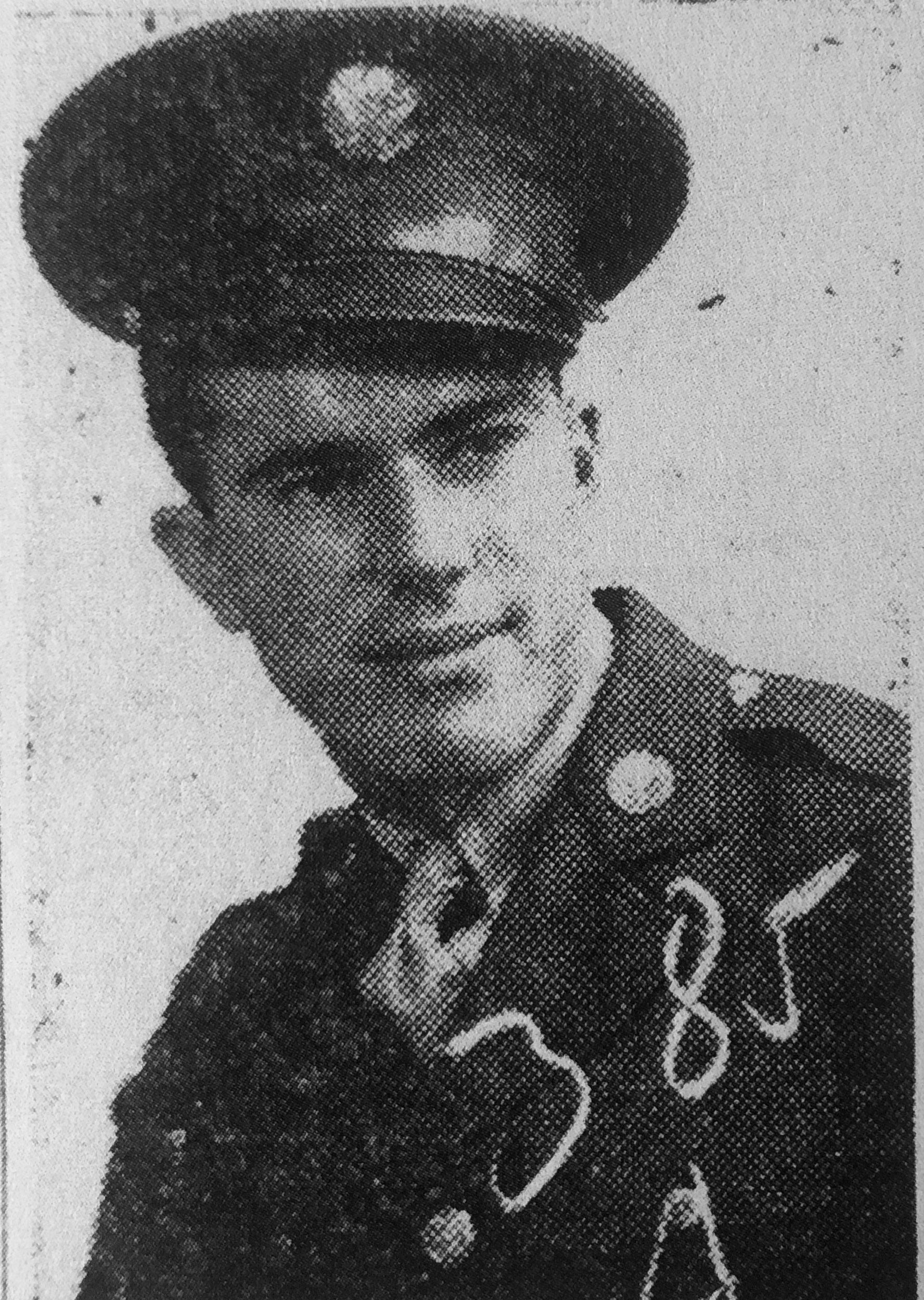
S/Sgt. David Kent Ollre. Photo www.findagrave.com, courtesy of www.384thbombgroup.com
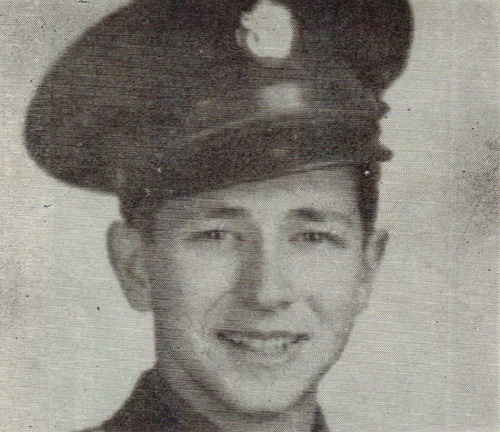
Cpl. James Arthur Moore. Photo www.findagrave.com, courtesy of www.384thbombgroup.com
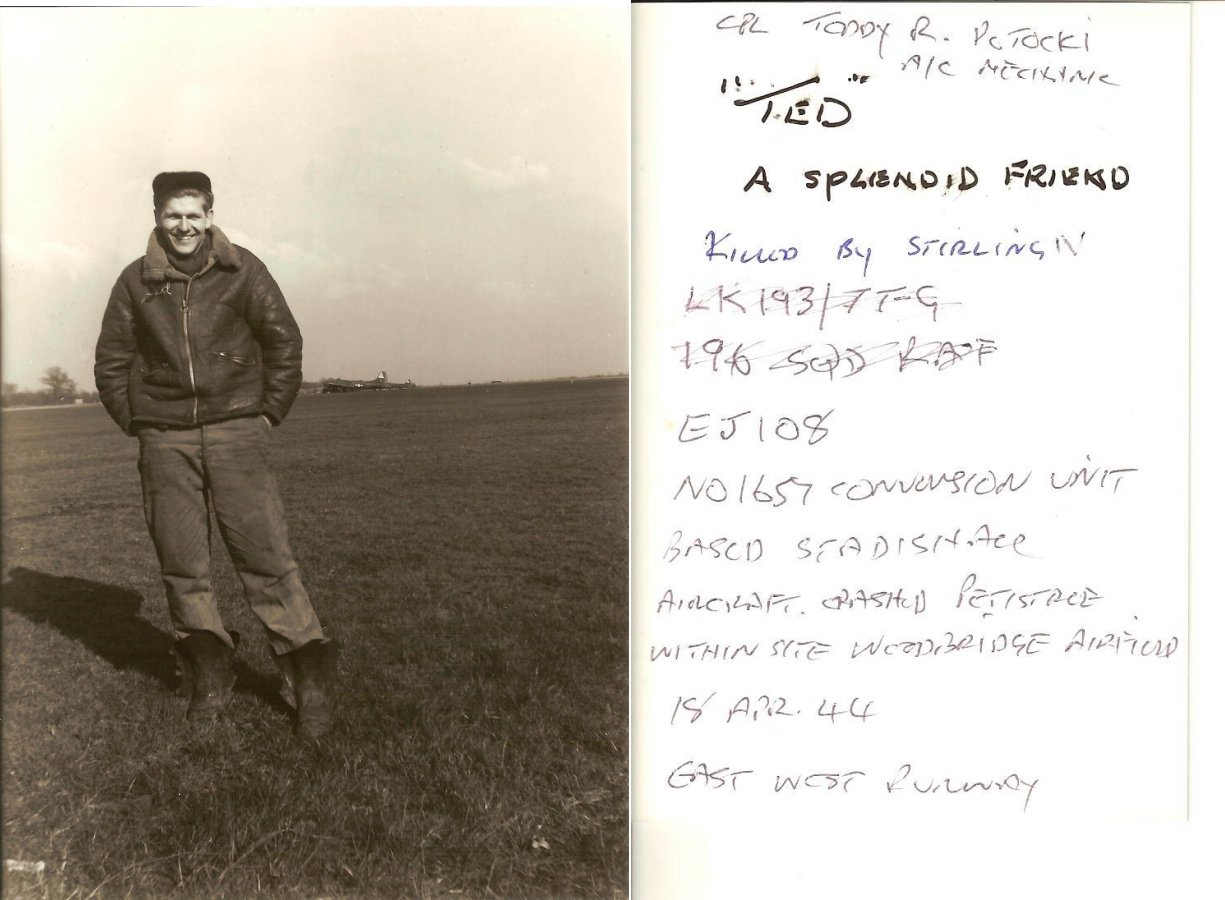
Cpl. Teddy Raymond Potocki. Photo The Quentin Bland Collection, courtesy of www.384thbombgroup.com
The Short Stirling Incident - 18th April 1944
Short Stirling III, EJ108, 1657 Heavy Conversion Unit, RAF
S/Sgt. David Kent Ollre, Cpl. James Arthur Moore, Cpl. Teddy Raymond Potocki were all members of the ground crew for the 545th Bomb Squadron. Being original crewmembers assigned to the group, S/Sgt. Ollre joined in December 1942, followed by Cpl. Moore in February 1943 and Cpl. Potocki in April 1943.
S/Sgt. Ollre served as a Radio Operator (ground based), Cpl. Potocki, an Airplane Propeller Mechanic, and Cpl. Moore an Administrative Clerk.
On 18 April 1944, around 11 PM, the trio were returning from an evening out in the nearby village of Geddington – the village was a common destination as it was home to a public house, which was often frequented by members of the 384th Bomb Group. Although expressly forbidden, on their return to the airfield they had proceeded to cycle down, or across, the Number 2 runway that runs roughly west to east, with the western end just a couple of miles from the village. Unbeknown to them, a Royal Air Force bomber on a crew training mission in a Short Stirling III aircraft, were practicing their nighttime touch-and-go landings on this runway. With the USAAF conducting day light raids, the use of American airfields for nighttime training use by the RAF was not uncommon.
Tragically, as the aircraft made its fourth pass, it struck and instantly killed all three of the men.
The Short Stirling was piloted by Flt. Lt. Hugh Charles Wilkie and co-pilot, Flt. Lt. Colin George Nairne. It appears damage was caused to an engine and the undercarriage during this tragedy, with an emergency dinghy and ration packs also found at the scene suggesting further damage had been caused to the fuselage. The decision was made by the experienced pilot to head to the emergency landing strip at Woodbridge, Suffolk – these were vast runways, much wider and longer than a normal runway - giving an aircraft in distress more room to facilitate a safe landing.
During the flight, one of the engines caught fire. Flt. Lt. Wilkie ordered the crew to bail out. He and flight engineer, WO. William “Sandy” Alexander Watson, decided to remain on board the aircraft and attempt to land it. Witnesses reported that the aircraft suffered some kind of mid-air explosion before steeply pitching nose-up, and then crashing into a field at Moat Farm in Suffolk, just thirty minutes after the tragedy at Grafton Underwood. Flt. Lt. Wilkie and WO. Watson were instantly killed. Their student flight engineer, Sgt. Frederick Thomas George Atkins, was also killed during the bail-out due to an improperly fastened parachute harness.
Though their service with the 384th Bomb Group was brief and ended in tragedy, the lives of S/Sgt. Ollre, Cpl. Potocki, and Cpl. Moore are not forgotten. While originally interred in England, all three have since been repatriated to their home states.
S/Sgt. David Kent Ollre (age 23) was laid to rest in his hometown of Gonzales, Texas. He was survived by his wife, son, parents, and four siblings.
Please refer to 'Research - People' for David Kent Ollre's full story
Cpl. Teddy Raymond Potocki (age 23) was laid to rest in Rochester, New York, survived by his mother and father.
Please refer to 'Research - People' for Teddy Raymond Potocki's full story.
Cpl. James Arthur Moore (age 22) was laid to rest in Maryland, survived by his parents and brother.
Please refer to 'Research - People' for James Arthur Moore's full story
The six surviving crew members of the Stirling bomber went on to complete their training. Tragically just a couple of months after the Grafton Underwood incident, they were crew on a 75 Squadron RAF Lancaster that was involved in a mid-air collision over the English Channel with another Lancaster. Of the six, only Frederick Rickard was to survive – he was to survive the war, passing away on 3rd April 1998. Of the remaining five, their bodies were never recovered.
Crew of Short Stirling, 1657 Heavy Conversion Unit, Royal Air Force – 18th April 1944
Pilot Flt. Lt. Hugh Charles Wilkie (DFC) RNZAF, Aged 21, Killed
Pilot Flt. Lt. Colin George Nairne RNZAF, Aged 22, Survived
Flt. Eng W.O. William ‚Sandy’ Alexander Watson (DFM) RAF, Aged 25, Killed
Flt. Eng. Sgt. Frederick Thomas George Atkins RAFVR, Aged 20, Killed
Bomb Aimer Plt. Off. Lyndon Clifford Perry RNZAF, Aged 21, Survived
Air Gunner Plt. Off. Frederick Gerald Rickard RNZAF, Aged 22, Survived
Air Gunner Sgt. Alfrred Richard Stannard RAFVR, Aged 22, Survived
Air Gunner Sgt. Stanley Alfred George Woodford RAFVR, Aged ?, Survived
Air Gunner Flt. Sgt. Philip Falkiner RNZAF, Aged ?, Survived
Research courtesy of Mikayla Leech & Keith Andrews on behalf of 384th Bombardment Group Museum.
With kind thanks to the 384th Bomb Group website www.384thbombgroup.com for permission in using material from their records in the making of this story. It holds a wealth of information, documents and photographs of their activities during World War 2.
Further information courtesy of www.newspapers.com, www.ancestry.com and www.findagrave.com
Further information specific to the details of the Short Stirling and its crew:-
www.aircrewremembered.com/wilkie-hugh.html
A Heroic Mystery WAAF by Bill Knight
https://www.bbc.co.uk/history/ww2peopleswar/stories/56/a1073756.shtml
WW2 People's War is an online archive of wartime memories contributed by members of the public and gathered by the BBC. The archive can be found at www.bbc.co.uk/ww2peopleswar
Gallery
Short Stirling XT-M, 1657 HCU RAF, at Grafton Underwood. Photo Tony Plowright, courtesy of www.384thbombgroup.com
Short Stirling XT-M, 1657 HCU RAF, at Grafton Underwood. Photo Tony Plowright, courtesy of www.384thbombgroup.com
Short Stirling XT-M, 1657 HCU RAF, at Grafton Underwood. Photo Tony Plowright, courtesy of www.384thbombgroup.com
Short Stirling XT-M, 1657 HCU RAF, at Grafton Underwood. Photo Tony Plowright, courtesy of www.384thbombgroup.com
Short Stirling XT-M, 1657 HCU RAF, at Grafton Underwood. Photo Tony Plowright, courtesy of www.384thbombgroup.com
S/Sgt. David Kent Ollre. Photo www.findagrave.com, courtesy of www.384thbombgroup.com
Cpl. James Arthur Moore. Photo www.findagrave.com, courtesy of www.384thbombgroup.com
Cpl. Teddy Raymond Potocki. Photo The Quentin Bland Collection, courtesy of www.384thbombgroup.com