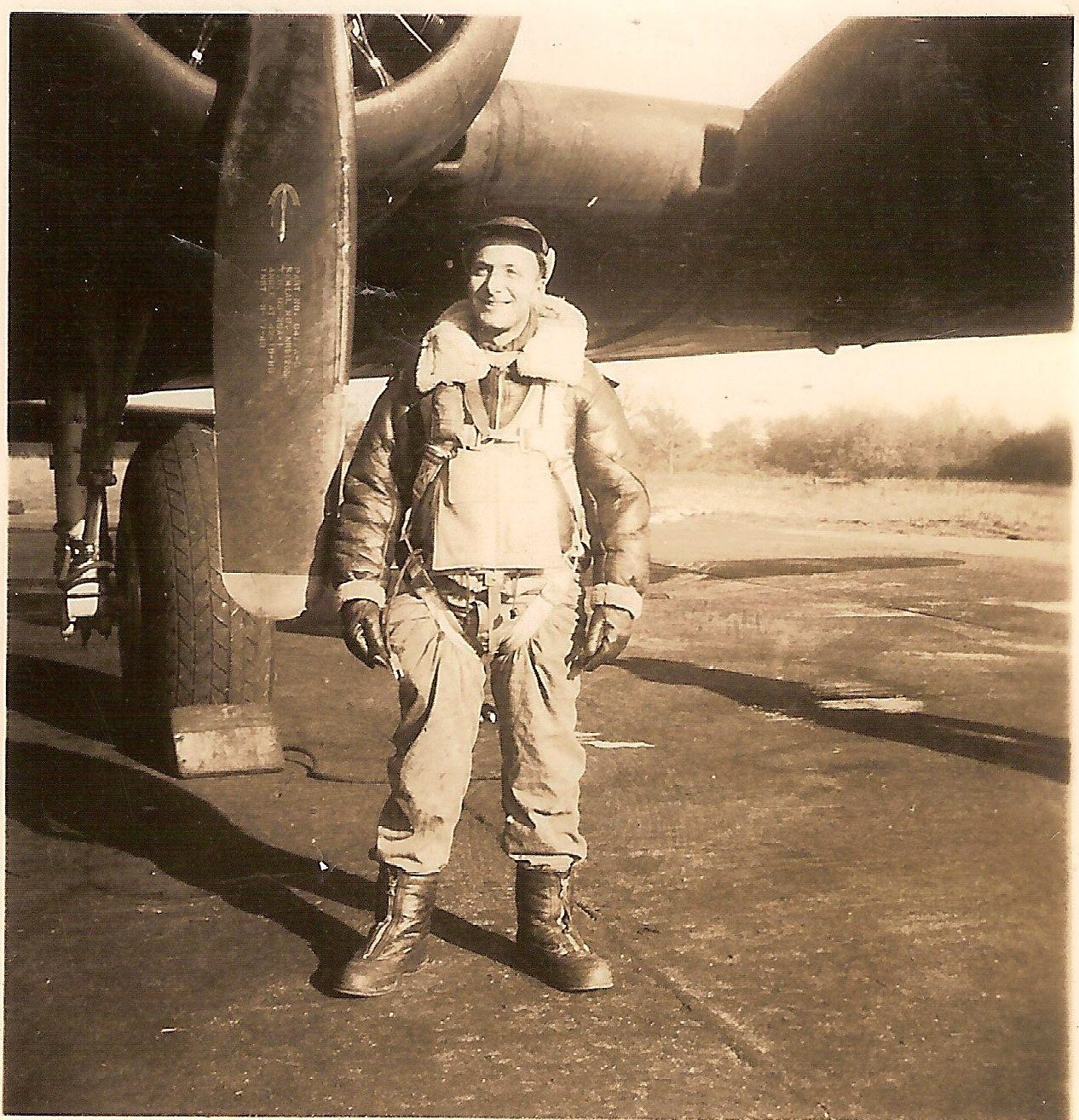
T/Sgt. Aldo Joseph Gregori, 544th Bomb Squadron, 384th Bomb Group. Photo courtesy of www.384thbombgroup.com
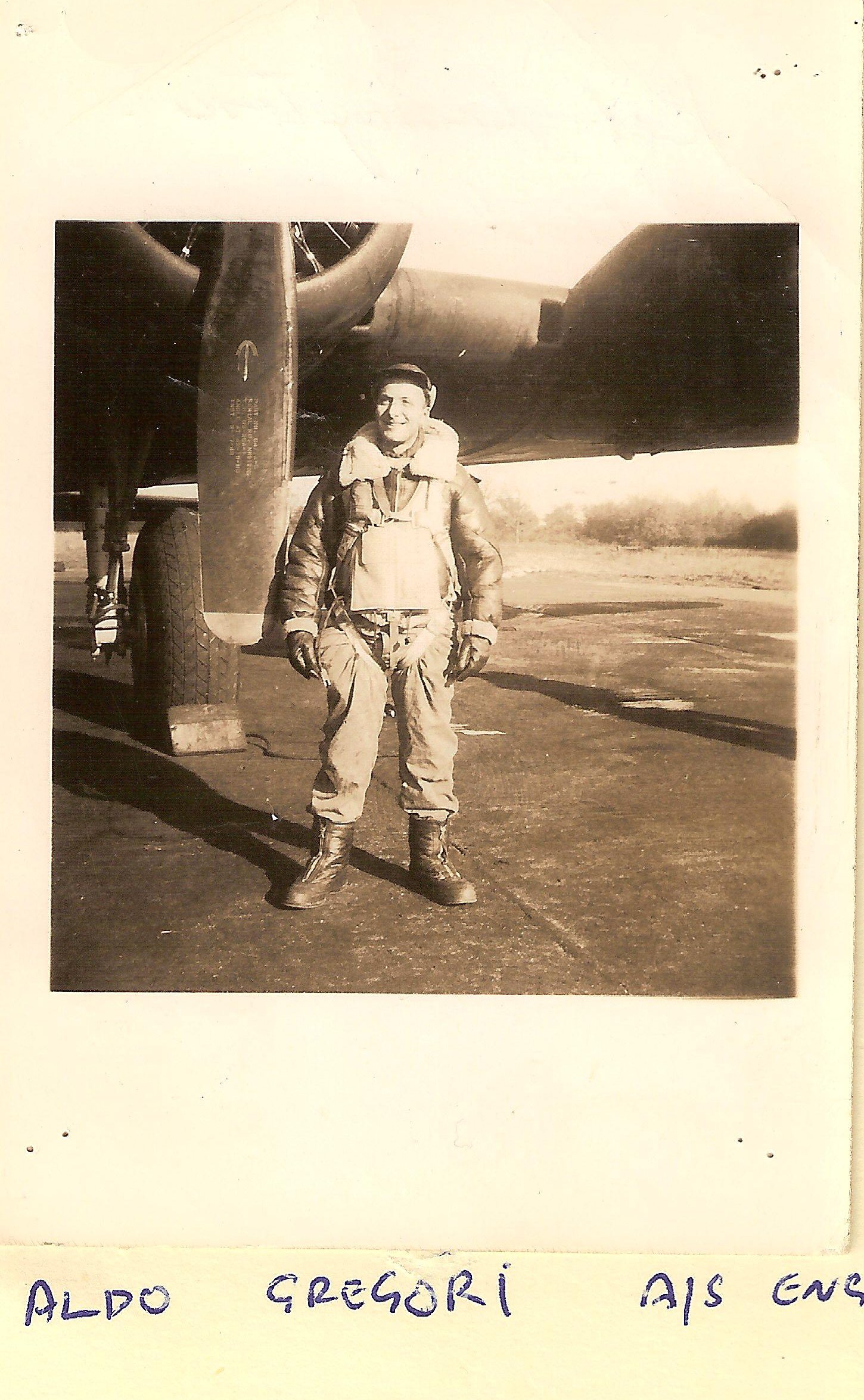
T/Sgt. Aldo Joseph Gregori, 544th Bomb Squadron, 384th Bomb Group. Photo courtesy of www.384thbombgroup.com
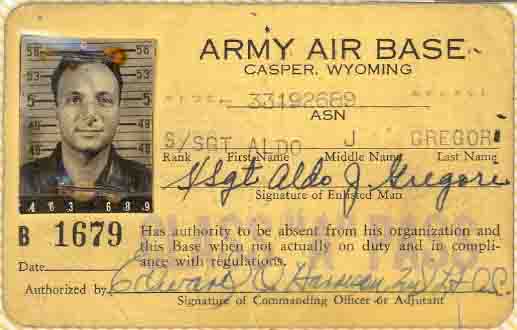
Photo courtesy of www.348thbombgroup.com
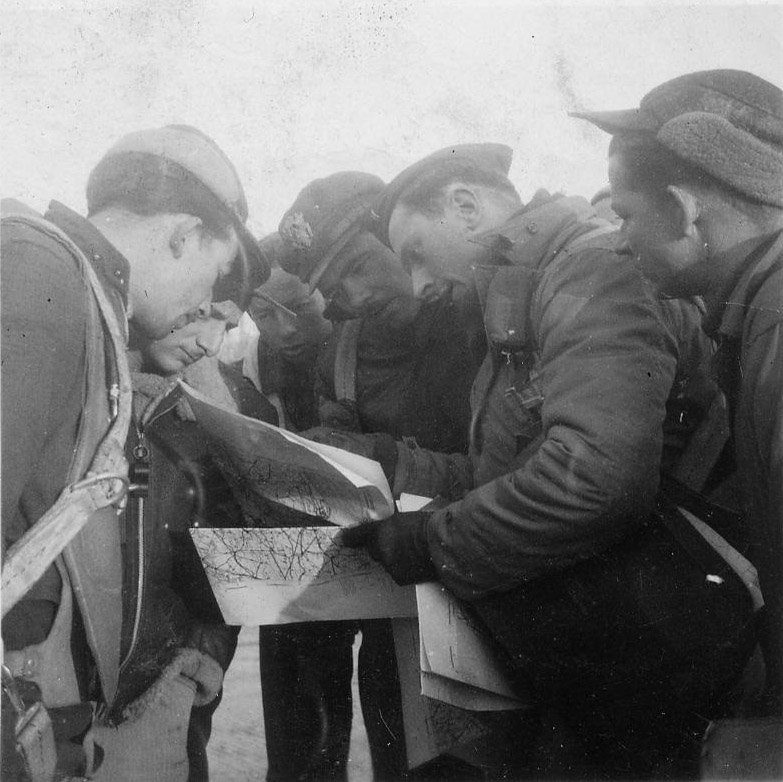
Taken 24th Dec,1943, the mission prior to his last. L-R - S/Sgt. Jack Goetz, T/Sgt. Aldo Gregori, 2nd Lt. Winthrop Jackson, 1st Lt. Randolph Jacobs, 2nd Lt. John Curtin, S/Sgt. Doy Cloud. Photo courtesy of www.384thbombgroup.com
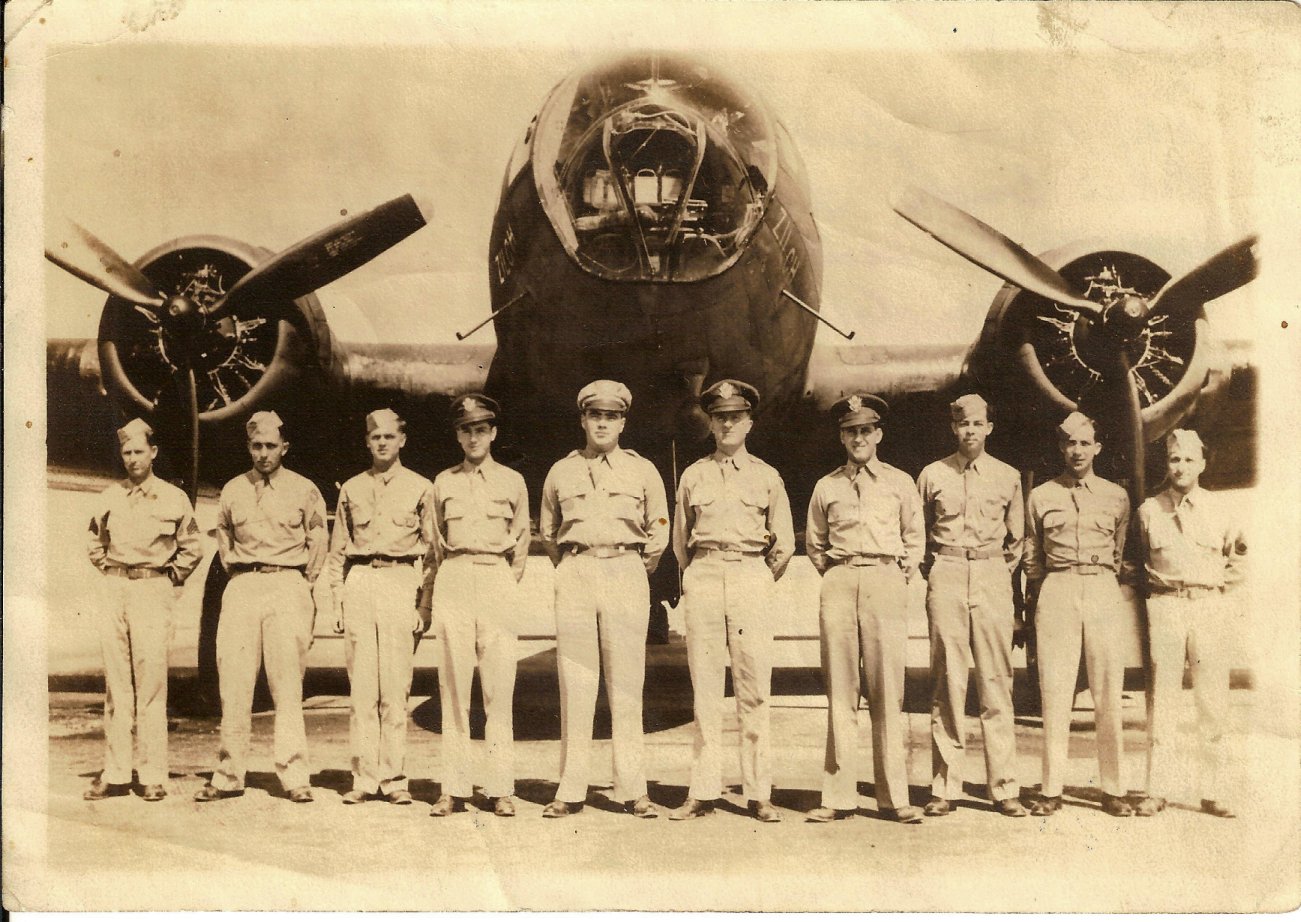
Taken May 1943, Casper, Wyoming. T/Sgt. Aldo Gregori 1st from right. Photo - The Quentin Bland Collection, courtesy of www.384thbombgroup.com
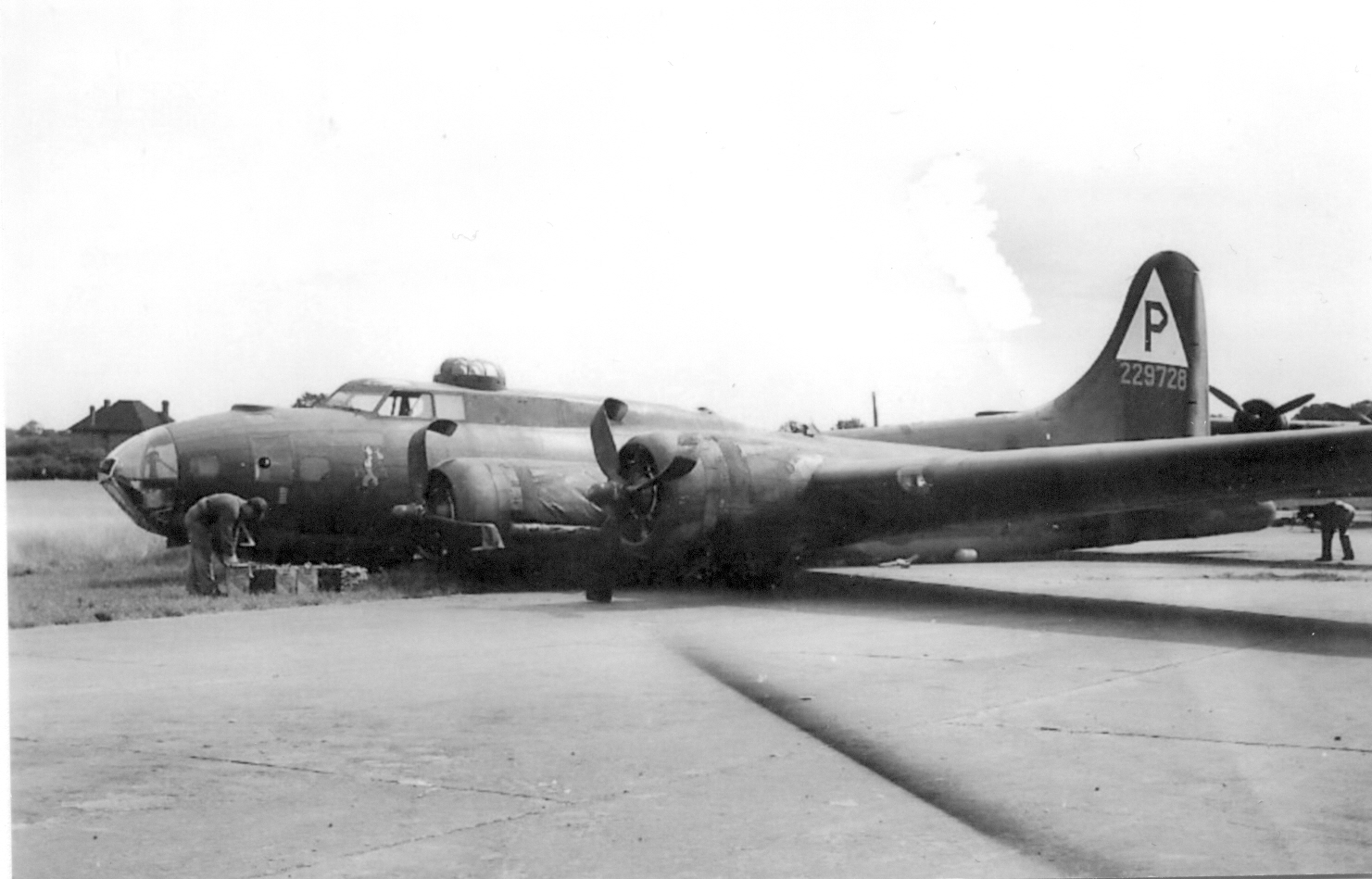
B-17F #42-29728 El Rauncho, crash landed 17th August 1943 after taking part in the infamous Schweinfurt-Regensburg raid. Photo courtesy of www.384thbombgroup.com
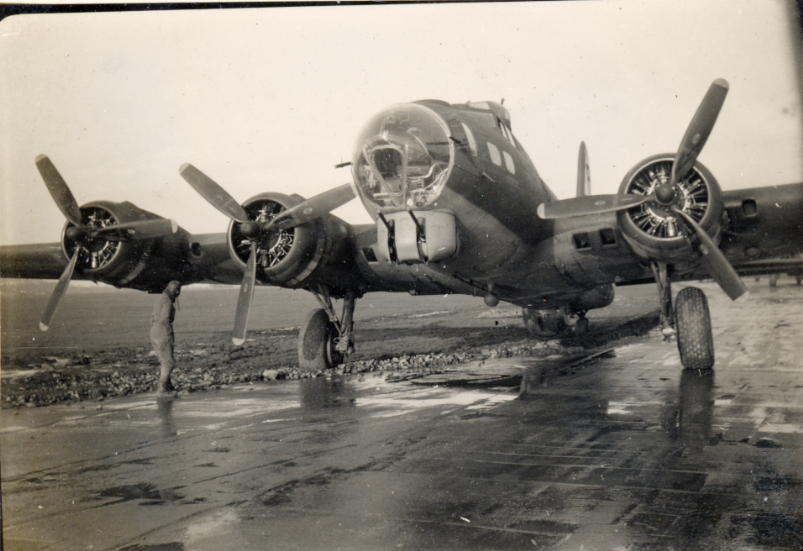
B-17G #42-31274 Sea Hag, the aircraft which ditched leading to the loss of T/Sgt. Aldo Gregori's life. Photo - The Ken Decker Collection courtesy of www.384thbombgroup.com
The Story of Aldo Joseph Gregori
Last updated: March 29, 2026, 8:39 amT/Sgt.
Aldo Joseph Gregori
Engineer / Top Turret / Flexible Gunner
544th Bomb Squadron
384th Bombardment Group (Heavy)
Serial Nr 33192689
MIA 30/12/1943 Aged 26
Combat Missions Credited - 15
Resting place - Tablets of the Missing, Cambridge American Cemetery, Madingley, Cambridge, UK
Aldo Joseph Gregori was born on 4th May 1917. Pre-war, Aldo managed a Washington DC deli on behalf of his cousin, Biagio Ambrogi.
On the 31st July 1943, Aldo was assigned to the 544th Bomb Squadron, of the 384th Bombardment Group (Heavy). He was to be credited with a total of 15 combat missions.
On the 17th August 1943 he was part of the crew on B-17F #42-29728 El Rauncho, taking part in the infamous Schweinfurt-Regensburg raid. This was his third combat mission, with the aircraft suffering heavy damage including a feathered engine, and damage to the undercarriage. The aircraft was able to make it back to Grafton Underwood but was severely short of fuel. The decision was made to circle the airfield to allow other aircraft to land, before the inevitable crash landing which posed the risk of blocking runways. However, a further engine died due to a lack of fuel, leaving no other option than to land immediately. A belly landing ensued, with the aircraft sliding a considerable distance before finally coming to rest very close to some parked aircraft. Although all the crew walked away with minimal injuries, the aircraft was deemed to be non-repairable, and was subsequently salvaged.
T/Sgt. Gregori's 15th mission was flown on 30th December 1943, mission #47 for the 384th. Target for the day was the I.G. Farben Industrie chemical and synthetic rubber plants at Ludwigshafen, Germany. As the aircraft crossed the English Channel on the way out to the target, it is reported that an engine was causing concern due to it running rough. A vote was cast across the crew as to whether to abort or to continue with the mission - the vote was six to four in favour of continuing. It appears there were some pressures at this time for crews to reduce the number of mission aborts which may have swayed opinion in favour of continuing, as opposed to the safe option of returning to base.
Around 40 miles into France, some light flak struck #1 engine, causing oil loss. By the time the engine was attempted to be feathered, the oil loss was sufficient to render the actuators ineffective due to the loss of oil pressure. At around 25,000 feet the propellor started to run away, with the effect of suddenly pulling the aircraft into a spin. Finally, at around 6,000 feet, the pilots were able to gain control over the aircraft however, shortly after #1 engine was to catch fire, and start to disintegrate.
The aircraft was now over the English Channel, and was losing height rapidly making ditching inevitable - T/Sgt. Gregori had already kicked out the rear door. The B-17 hit the water hard with the impact apparently ripping a section off one wing, and causing the tail section to detach from the fuselage. The Navigator and Engineer, both assuming the crash landing position in the radio room along with six of the other crew, were washed out of the radio room by the rush of water into the bomb bay, before being washed back into it again. T/Sgt. Gregori had assumed a position by the escape hatch in the top of the radio compartment to help pull crew members through, and out of the aircraft. The Navigator was the last of the crew to successfully exit via this route. T/Sgt. Gregori then appeared, but had become entangled in the control cables of the aircraft. Within 15 seconds of hitting the water, the aircraft slipped beneath the waves, taking T/Sgt. Gregori down with it before he could free himself.
The Pilot and Co-Pilot had escaped the aircraft through the cockpit windows, and became separated from the rest of the crew who had managed to clamber into life rafts. Within about an hour, the crew in the life rafts would be rescued by a Royal Navy coastal patrol boat, to find that the Pilot and Co-Pilot had already been picked up safely. The speed at which the crew were recovered may be testament to the RAF Supermarine Spitfire that had been spotted accompanying the B-17 in it's last moments ahead of ditching, assumably reporting the location to rescue services.
The incident is covered in detail in the excellent book "One Small Town Boy", by Jack Goetz and Gerald A. Meehl. S/Sgt. Jack Goetz was a member of the crew that day, and was a good friend of T/Sgt. Gregori. Having lost his own jacket in the crash, S/Sgt. Goetz took that of T.Sgt. Gregori when his possessions were being sorted at Grafton Underwood - many years after the war ended, his friend's jacket was still in his possession. The crew were to return to action on the 14th January, 1944.
T/Sgt. Gregori's body was never recovered. Today he is remembered on the Tablets of the Missing, Cambridge American Cemetery, Madingley, Cambridge, UK.
With kind thanks to the 384th Bomb Group Heritage Association website (384thbombgroup.com) for permission in using material from their records in the making of this story. It holds a wealth of information, documents and photographs of the Group’s activities during World War 2.
Research courtesy of Keith Andrews on behalf of 384th Bombardment Group Museum.
Gallery
T/Sgt. Aldo Joseph Gregori, 544th Bomb Squadron, 384th Bomb Group. Photo courtesy of www.384thbombgroup.com
T/Sgt. Aldo Joseph Gregori, 544th Bomb Squadron, 384th Bomb Group. Photo courtesy of www.384thbombgroup.com
Photo courtesy of www.348thbombgroup.com
Taken 24th Dec,1943, the mission prior to his last. L-R - S/Sgt. Jack Goetz, T/Sgt. Aldo Gregori, 2nd Lt. Winthrop Jackson, 1st Lt. Randolph Jacobs, 2nd Lt. John Curtin, S/Sgt. Doy Cloud. Photo courtesy of www.384thbombgroup.com
Taken May 1943, Casper, Wyoming. T/Sgt. Aldo Gregori 1st from right. Photo - The Quentin Bland Collection, courtesy of www.384thbombgroup.com
B-17F #42-29728 El Rauncho, crash landed 17th August 1943 after taking part in the infamous Schweinfurt-Regensburg raid. Photo courtesy of www.384thbombgroup.com
B-17G #42-31274 Sea Hag, the aircraft which ditched leading to the loss of T/Sgt. Aldo Gregori's life. Photo - The Ken Decker Collection courtesy of www.384thbombgroup.com