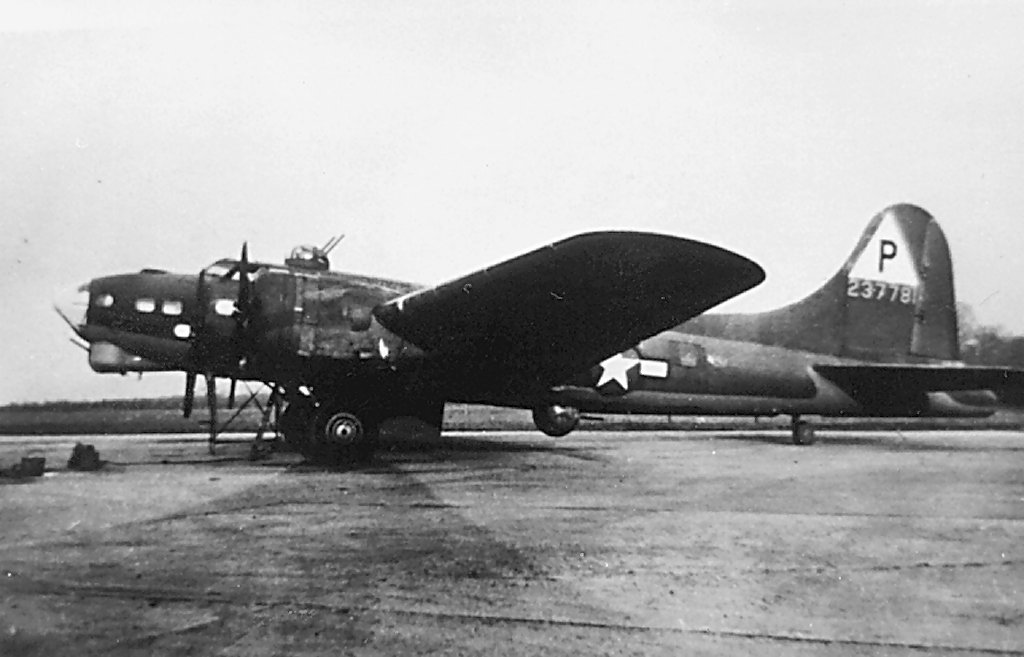
B-17G #42-37781 Silver Dollar. Photo courtesy of www.384thbombgroup.c
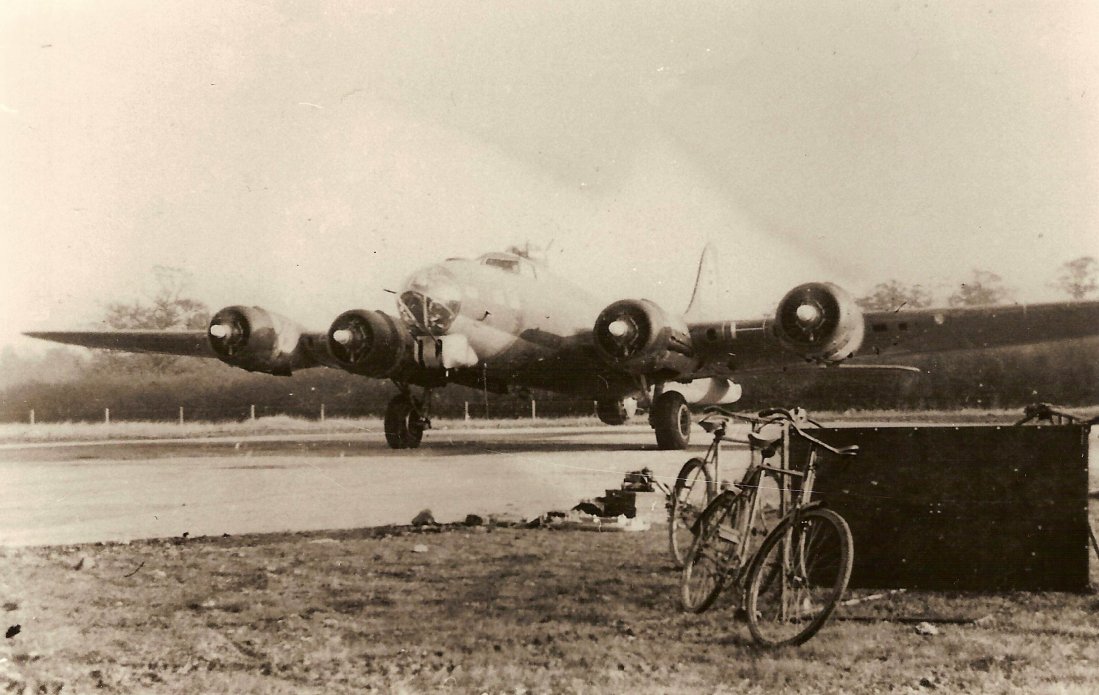
B-17G #42-37781 Silver Dollar. Photo - The Quentin Bland Collection courtesy of www.384thbombgroup.com
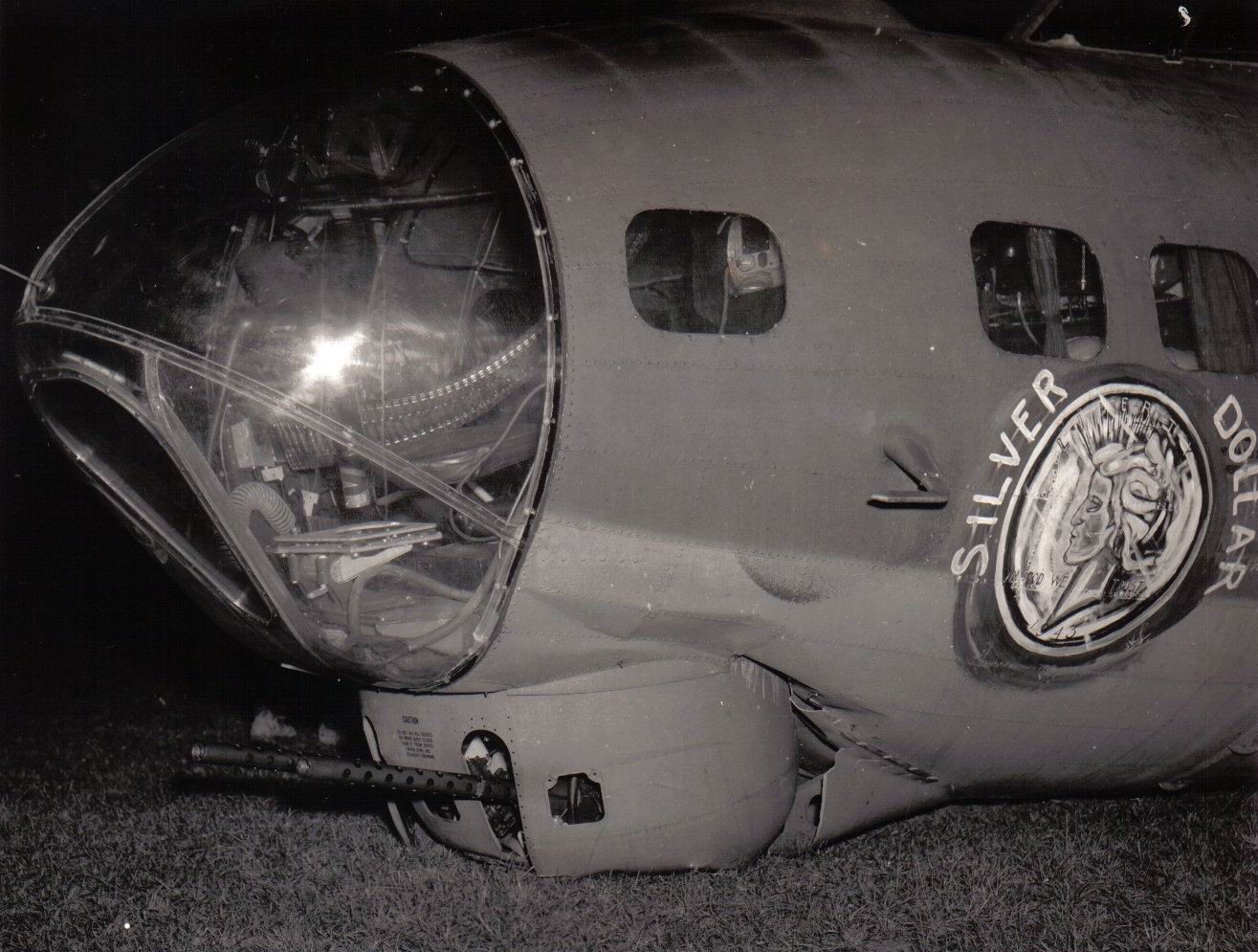
Damaged sustained on 26th December 1943 at Little Staughton, after the right landing gear failed to extend. Photo courtesy of www.384thbombgroup.com
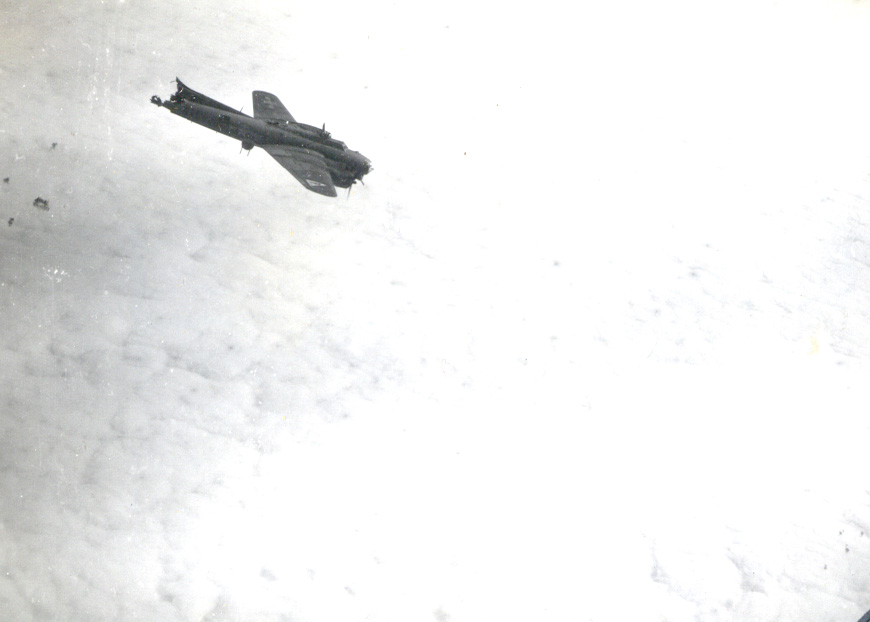
B-17G #42-37781 immediately after being struck by a bomb, severing the tail section. Photo - The Ken Decker Collection, courtesy of www.384thbombgroup.com
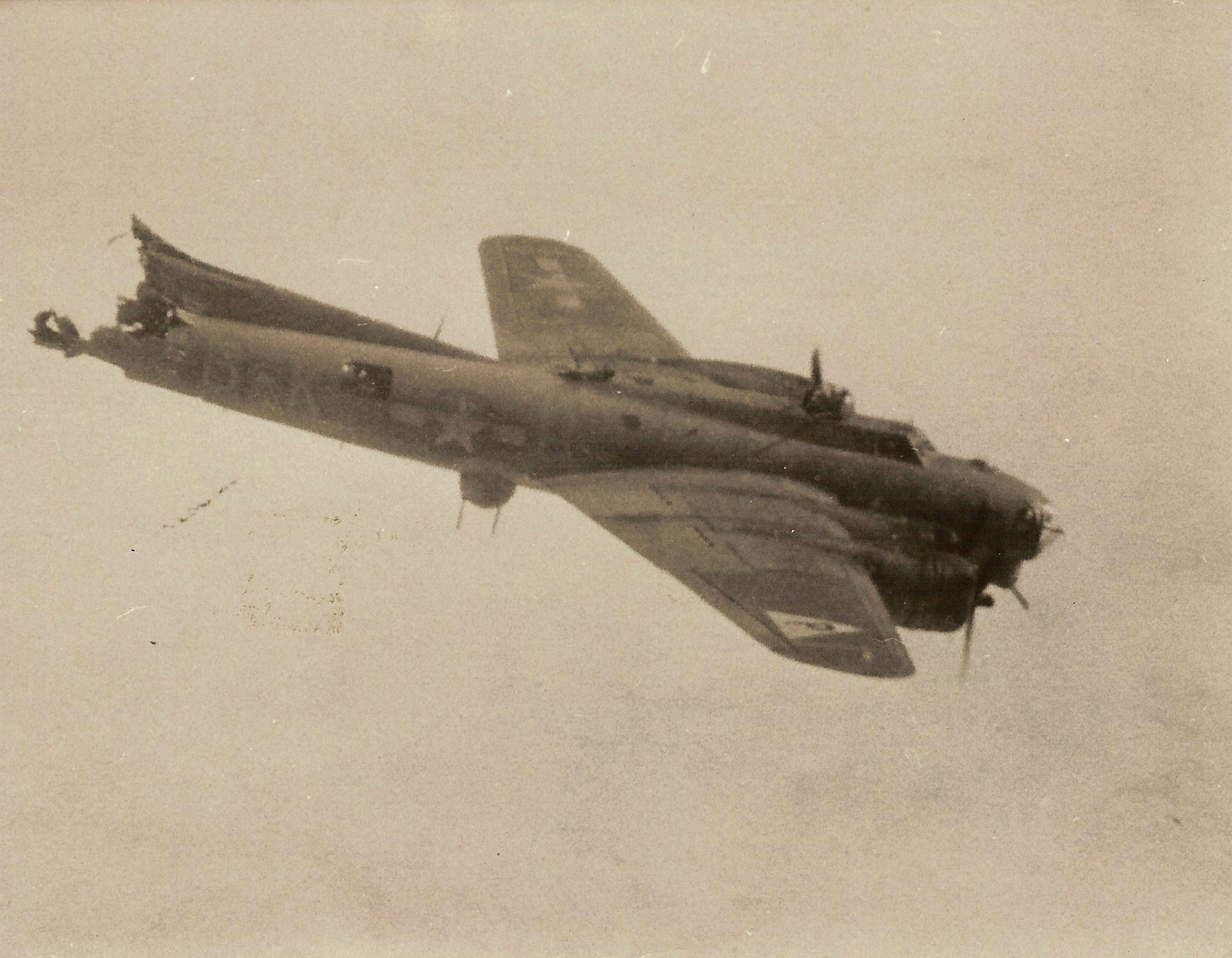
A zoomed in image of Silver Dollar after being struck by a bomb from a 379th BG aircraft. Note position of ball turret guns, enabling exit of the gunner who was one of the two crew members who were able to parachute to safety. Photo - The Quentin Bland Co
Silver Dollar
Last updated: December 21, 2025, 9:45 am| Name: | Silver Dollar |
| Serial Number: | 42-37781 |
| Manufacturer: | Douglas Aircraft Company |
| Finish: | Camouflage |
| Squadron: | 546th Bomb Squadron |
| Squadron ID: | BK-U |
| Combat Missions Credited: | 5 |
| Fate: | Crashed, destroyed 09/03/1944 |
Delivered at Denver 26th August 1943, and originally assigned to the 303rd Bombardment Group at RAF Molesworth. The aircraft was subsequently transferred to the 384th Bombardment Group on 2nd November 1943, and named Silver Dollar.
In it's time with the 384th, the aircraft was assigned to 7 missions, gaining combat credit for 5 of these.
It's first combat mission came on 29th November 1943, the 384th's mission #38. The target for today was the port area of Bremen, Germany. Flown by pilot 2nd Lt. Sidney Paul Taylor, today's mission became deadly for as much the weather conditions as for enemy actions. Heavy, dense cloud had forced the outgoing formation to 27,800ft, 800ft higher than the planned cruising altitude. On the way to the target, it is reported in 2nd Lt. Taylor's post flight brief that the left waist gunner, Sgt. Robert John Conn, was suffering from his 'eyes' freezing - once cleared, they subsequently refroze. As the aircraft approached the IP, minor flak damage was suffered but with minimal effect. After bombs away, they suffered damage to the left aileron cables in a fighter pass, temporarily affecting the control of the aircraft which in turn forced them out of formation. Control was soon regained, and the aircraft returned to its position in the formation.
Just prior to the IP, it had become apparent that there was an issue with the oxygen supply to the ball turret gunner, S/Sgt. Joseph Albert Kuspa. The right waist gunner, Sgt. Sidney Charles Ukrain, was instructed to attend and try to help. After about 15 minutes, he reported that they could not remove the turret gunner and he reported him to be in extreme difficulty. With the Radio Operator, S/Sgt. William Stuart Braman, now also assisting, eventually S/Sgt. Kuspa was removed - however he was feared to be dead. Despite trying to revive him, it was too late. In the course of his actions, Sgt. Conn had suffered severe injuries from the freezing temperatures (noted at around -60C), affecting his hands and feet, and he was also suffering from a lack of oxygen. With oxygen supply next becoming an issue for pilot and co-pilot, the aircraft descended to 800ft as soon as it was safe to do. Now flying on its own, they set course for the English coast, eventually arriving over Cromer at around 5.15pm and in failing light. A searchlight beam had picked them up and helped to guide them to an airfield around ten miles away, which was to be RAF Coltishall in Norfolk, where they were able to safely land. Further inspection of S/Sgt. Kuspa determined that he had vomited into his oxygen mask, which subsequently froze, preventing the supply of oxygen to him.
Repairs were made to the aircraft at RAF Coltishall to enable its return to Grafton Underwood, but it would remain out of action for the next five combat missions until the 20th December. For S/Sgt. Braman and Sgt. Conn, this was their first and last missions for the group, their injuries preventing further action with the 384th. Sgt. Ukrain would return to action but not until the 31st December, however he was to complete his tour of duty, amassing a total of 31 combat missions in the process.
During a training flight on 26th December 1943, a malfunctioning right landing gear forced the crew into a belly landing at Little Staughton. There were no injuries to the crew, however the aircraft sustained damaged (including a damaged nose section due to the chin turret, see images) - this was to put the aircraft out of action until its next mission just over 2 months later on 6th March 1944.
On the 9th March 1944 the aircraft was part of mission #74 for the 384th, to the Heinkel Aircraft Plant at Oranienburg, Germany. With the main target covered by dense clouds, the formation diverted to the Secondary Target which was the city centre of Berlin.
At the moment of bombs away over the target, at 13.58 and an altitude of 23,400ft., a higher group in the formation had slipped above the position of Silver Dollar. A bomb dropped from an aircraft of the 379th Bomb Group struck just forward of the vertical stabiliser, severing the entire tail section from the fuselage. The aircraft immediately entered an uncontrolled dive, with all four engines still running. It was eventually to crash to the ground at Mallenfeld, Germany. Of the ten crew, two were able to parachute to safety and became Prisoners of War. Of the remaining eight members of crew, all bodies were recovered by German forces from the wreckage and were interred at a cemetery at Elsgrump, Germany. After the war, five of the bodies were identified, with the remaining three unidentifiable and these crewmembers are officially classed as 'Missing in Action'.
The crew for this final flight were:-
Pilot 1st. Lt. Merlin Howard Reed MIA, 19 combat missions
Co-Pilot 2nd Lt. Bruce Martin Rininsland KIA, 17 combat missions
Navigator 1st Lt. Peter Gudyka MIA, 21 combat missions
Bombardier 2nd Lt. John Lawrence Heiss KIA, 16 combat missions
Radio Op. T/Sgt. Eobert Francis Wellman KIA, 20 combat missions
Enginer/TT Sgt. Robert O. Johnson MIA, 16 combat missions
Ball Turret S/Sgt. Arthur John Osepchock POW, 19 combat missions
Tail Gunner Sgt. Emmet Francis Hardy KIA, 17 combat missions
Waist Gunner S/Sgt. John James Plotz POW, 18 combat missions
Waist Gunner S/Sgt. Joseph Jacobson KIA, 11 combat missions
With kind thanks to the 384th Bomb Group website (384thbombgroup.com) for permission in using material from their records in the making of this story. It holds a wealth of information, documents and photographs of the Group’s activities during World War 2.
Research courtesy of Keith Andrews on behalf of 384th Bombardment Group Museum.
Gallery
B-17G #42-37781 Silver Dollar. Photo courtesy of www.384thbombgroup.c
B-17G #42-37781 Silver Dollar. Photo - The Quentin Bland Collection courtesy of www.384thbombgroup.com
Damaged sustained on 26th December 1943 at Little Staughton, after the right landing gear failed to extend. Photo courtesy of www.384thbombgroup.com
B-17G #42-37781 immediately after being struck by a bomb, severing the tail section. Photo - The Ken Decker Collection, courtesy of www.384thbombgroup.com
A zoomed in image of Silver Dollar after being struck by a bomb from a 379th BG aircraft. Note position of ball turret guns, enabling exit of the gunner who was one of the two crew members who were able to parachute to safety. Photo - The Quentin Bland Co